Records from the 1900s to the 1920s · A new episode every Tuesday

Author: boneapart

  • The Rise of Animation

    The Rise of Animation: From Early Cartoons to Disney’s Golden Age

    Exploring the origins and ascent of animated film as a major storytelling medium

    Introduction: The Birth of a New Medium

    Animation began as a curious experiment—an illusion of motion conjured from still images, flickering through hand-cranked projectors and optical toys. In its earliest form, it was more magic trick than storytelling device, a spectacle of spinning zoetropes and sketchbooks come to life. But as cinema evolved, so too did animation, growing from a novelty act into a dynamic and imaginative medium capable of telling rich, emotionally resonant stories.
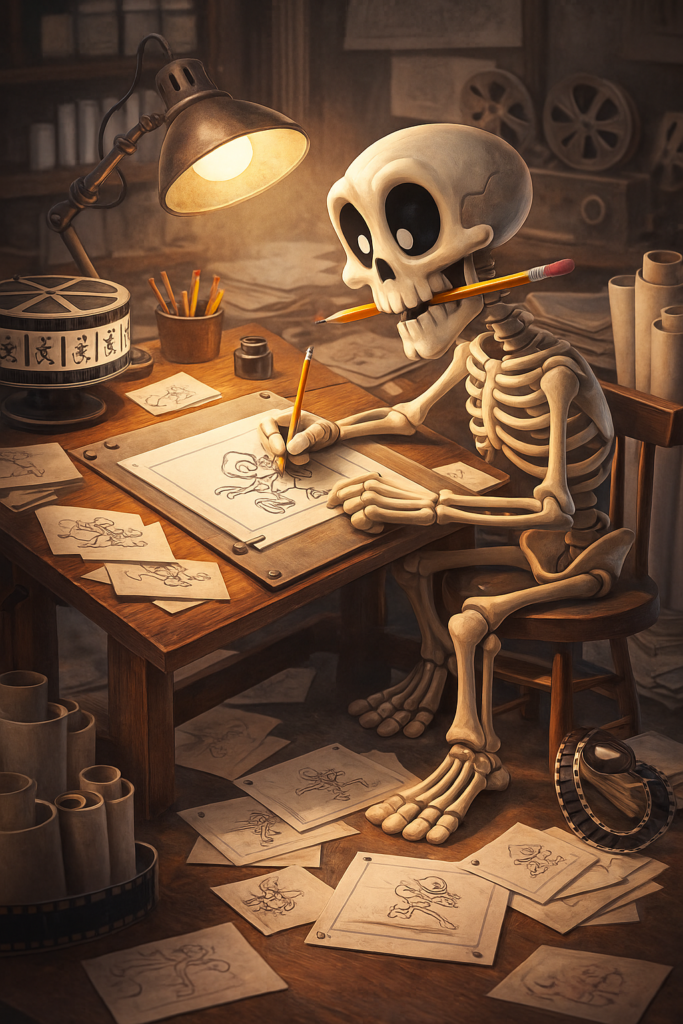
    While live-action film was busy capturing the world as it was, animation allowed artists to reimagine the world entirely—bending reality, reshaping time, and breathing life into the impossible. From dancing skeletons to dinosaurs on parade, the first animated shorts thrilled audiences with their charm and ingenuity. Behind these playful images were pioneering animators, tirelessly experimenting with new techniques, drawing each frame by hand, and rethinking what film could be.

    This post explores the early decades of animation’s development, from its silent origins to the advent of synchronized sound and full-color feature films. Along the way, we’ll meet the innovators—Winsor McCay, the Fleischer Brothers, and of course Walt Disney—who helped elevate cartoons from the margins of cinema to a golden age of animated storytelling.

    Foundations of Animation: From Optical Toys to Film Strips

    Long before characters danced across the silver screen, the idea of making images move fascinated inventors, artists, and scientists alike. In the 19th century, optical toys such as the phenakistoscope and zoetrope dazzled viewers by creating the illusion of motion through a rapid succession of still images. These early devices relied on persistence of vision—the brain’s tendency to fill in gaps between images—to simulate movement. Though primitive by modern standards, these spinning discs laid the psychological and mechanical groundwork for what would become animated cinema.

    The leap from spinning toys to projected motion came gradually. Flipbooks became a popular parlor amusement in the late 1800s, while magic lanterns evolved to display sequences of images that hinted at narrative. As photographic technology improved, experiments in capturing real-world motion—like Eadweard Muybridge’s iconic studies of galloping horses—further demonstrated the power of sequencing images to depict time and motion.

    Early animation wasn’t confined to hand-drawing alone. Pioneers also explored stop-motion techniques, manipulating objects frame by frame to simulate movement. In 1900s Europe, filmmakers like Émile Cohl began creating whimsical animated shorts using cutouts and inked figures, blending surreal imagery with slapstick comedy. These films were short, often under a minute, but packed with visual imagination.

    By the 1910s, animation was making its way into cinemas, not just as an experimental curiosity but as a form of popular entertainment. With the rise of newsreels and variety programs, animated shorts became regular fixtures in theaters, drawing crowds eager to see dancing skeletons, mischievous cats, and other lively creations brought to life by hand and perseverance.

    Though crude by today’s standards, these early efforts captured something essential: the playful spirit and creative freedom that would define animation as an art form. The foundation had been laid—frame by painstaking frame—for the breakthroughs yet to come.

    Pioneers of the Animated Frame

    As animation inched toward legitimacy, it was driven not by corporations or committees, but by visionary individuals who saw the potential in a blank page and a moving line. These early pioneers didn’t just invent techniques—they invented the very language of animation itself.

    One of the most significant figures in early animation was Winsor McCay, a newspaper cartoonist whose imagination outpaced the technology of his time. In 1914, McCay released Gertie the Dinosaur, often cited as one of the first animated characters with a distinct personality. More than a technical marvel, Gertie was a performer—responding to commands, showing emotion, and even interacting with McCay himself during live screenings. This blending of animation and showmanship introduced audiences to the idea that drawings could do more than move—they could act.

    While McCay emphasized artistry and emotional resonance, the Fleischer Brothers—Max and Dave—brought gritty, urban humor and technical ingenuity. Working out of New York in the 1920s, the Fleischers developed rotoscoping, a technique that traced over live-action footage to create fluid motion. This approach added a level of realism to their characters, which included the rubber-limbed Betty Boop, the sailor Popeye, and a surreal, jazz-fueled cast of misfits. Their cartoons were chaotic, rhythmically timed to music, and brimming with wild imagination—far removed from the pastoral idealism soon championed by their West Coast competitor.

    Enter Walt Disney, whose rise would reshape animation into a dominant cultural force. In 1928, Disney released Steamboat Willie, the first cartoon to successfully synchronize sound with animation. Its plucky star, Mickey Mouse, became an instant sensation. While Mickey was not the first animated character, he was the first to become a brand, ushering in an era where animated personalities could rival their live-action counterparts in fame and marketability.

    Disney’s genius lay not only in creativity, but in building a studio system that treated animation like filmmaking. Storyboarding, pre-visualization, voice acting, music composition—it all came under one roof. This organized approach allowed for more complex narratives and polished production, setting the stage for the company’s most ambitious leap: a feature-length animated film.

    The groundwork laid by McCay, the Fleischers, and Disney transformed animation from vaudeville sideshow to cinematic spectacle. Each brought a different philosophy—artistry, innovation, and industrialization—and together, they propelled animation into its first true golden age.

    The Rise of Walt Disney and the Studio System

    If Winsor McCay proved animation could move, and the Fleischer Brothers proved it could groove, it was Walt Disney who proved it could feel. Under his leadership, animation evolved from gag-driven shorts into full-length cinematic experiences with heart, structure, and ambition. By the 1930s, Disney had transformed what was once a cottage industry into a fully operational studio system—one that approached animated films with the same seriousness as live-action epics.

    The watershed moment came with Steamboat Willie (1928), which didn’t just introduce Mickey Mouse—it introduced synchronized sound as a narrative tool. Unlike earlier attempts at sound in animation, Disney’s short matched music and movement with such precision that it felt seamless and alive. The cartoon’s success wasn’t just about novelty; it was about harmony—every whistle, tap, and squeak reinforced the rhythm of the visuals. Audiences were mesmerized. Animation was no longer silent.

    What followed was a flurry of invention and expansion. Disney and his team introduced storyboarding, allowing complex narratives to be pre-planned visually. They standardized the cel animation process, which streamlined production by layering drawings over static backgrounds. And they invested heavily in character development, giving animated figures clear personalities, motivations, and arcs—a stark contrast to the sight-gag-heavy shorts that dominated the era.

    Then came the gamble that changed everything: Snow White and the Seven Dwarfs (1937). It was the first feature-length cel-animated film, and no one believed it would work. Critics dubbed it “Disney’s Folly,” assuming audiences wouldn’t sit through a ninety-minute cartoon. But Disney bet on emotion. He and his animators poured unprecedented effort into nuanced facial expressions, atmospheric backgrounds, and synchronized musical sequences. They even built a custom multiplane camera to add depth and realism to their shots.

    The result? A box-office smash and a technical triumph. Snow White wasn’t just successful—it redefined what animation could be. It proved that animated films could tell serious, emotionally resonant stories on a grand scale. It paved the way for a studio model where animation could be treated with the same artistic rigor as any other cinematic form.

    Disney’s innovations—and his ability to surround himself with equally visionary artists—established the blueprint for feature animation. More than just cartoons, his films became cultural milestones, drawing families into theaters and inspiring generations of animators to come.

    Artistic and Technological Breakthroughs

    The golden age of animation didn’t happen by accident—it was built, layer by layer, through an extraordinary convergence of artistic ambition and technological ingenuity. As studios matured, animators sought new ways to deepen their craft, pushing past flat drawings toward richer, more immersive storytelling. The 1930s and 1940s were a period of rapid advancement, with breakthroughs in technique that would define animation for decades to come.

    Among the most transformative was the widespread adoption of cel animation. By drawing characters on transparent celluloid sheets, animators could overlay figures onto detailed, reusable backgrounds. This seemingly simple innovation revolutionized efficiency and consistency. It allowed studios to scale their productions, ensuring that each frame retained visual clarity without redrawing every detail from scratch. Cel animation became the backbone of the industry—used not just by Disney, but by competitors like Warner Bros., MGM, and Fleischer Studios.

    But efficiency was only part of the story. Animators were chasing depth—not just of meaning, but of space. Disney’s answer to this was the multiplane camera, an engineering marvel that layered background and foreground elements on separate planes. By moving these layers at different speeds during a shot, animators could simulate camera movement through a three-dimensional environment. The result was striking: forest scenes with shifting perspective, swooping overhead views of castles, and emotionally rich sequences that felt more alive than ever before.

    Sound also continued to evolve as an integral component of animation. With the success of Steamboat Willie still echoing, studios began integrating orchestral scores and sound effects more deliberately, not merely as accompaniment but as narrative tools. Songs were no longer afterthoughts—they were plot devices. In films like Bambi (1942), music guided mood and emotion, blending seamlessly with the visuals to create moments of poignant stillness or sweeping majesty.

    Technicolor added yet another dimension. First introduced in short cartoons and perfected in features like Snow White and Pinocchio, the vivid color palette allowed animators to experiment with symbolism, contrast, and visual mood in new ways. Colors could now signal emotion, set tone, or accentuate character traits—Snow White’s innocence in pale blue and yellow, the Evil Queen’s menace in cold purples and black.

    Together, these innovations didn’t just make cartoons prettier—they made them more cinematic. The gap between live-action and animation began to close, not through mimicry but through unique strengths: stylization, exaggeration, musicality, and expressive design. Animation wasn’t trying to imitate reality—it was creating a new one.

    The Golden Age of Animation (1930s–1940s)

    By the late 1930s, animation had burst into full bloom. No longer an experiment or a novelty, it was a dominant force in cinema—full of charm, personality, and technical brilliance. This period, often referred to as the Golden Age of Animation, marked the moment when animated characters became household names and studios turned out one classic after another.

    Disney, of course, led the charge with its string of landmark features: Pinocchio (1940), Fantasia (1940), Dumbo (1941), and Bambi (1942). Each film was a technical leap forward, exploring new methods in lighting, movement, emotional nuance, and music integration. Fantasia was especially bold—a fusion of classical music and experimental animation that challenged traditional storytelling altogether. Though not all of these films were box office hits on release, their artistry pushed the boundaries of what animation could express.

    Meanwhile, across town—and across tone—the Warner Bros. animation division was rewriting the rules of comedy. Where Disney focused on heart, Warner Bros. went for wit. With animators like Chuck Jones, Tex Avery, and Bob Clampett at the helm, cartoons became fast, funny, and a little subversive. Bugs Bunny, Daffy Duck, Porky Pig, and Elmer Fudd were born not from fairy tales, but from slapstick timing, clever wordplay, and razor-sharp parody.

    These cartoons often broke the fourth wall, mocked their own conventions, and delighted in absurdity. They weren’t afraid to wink at the audience—or smash through a painted tunnel. While Disney chased grandeur, Warner Bros. chased laughs, proving that animation could be just as effective in three-minute doses as it was in ninety-minute epics.

    The Fleischer Studios, despite financial troubles and legal battles, contributed significantly to the era’s creative output with their surreal, rubber-limbed characters and innovative techniques. They brought comic strip heroes like Superman to the screen with a moody, art-deco style that contrasted sharply with their zanier work like Betty Boop or Popeye. Though eventually eclipsed by Disney, their contributions helped diversify the tone and texture of animated cinema.

    Then came World War II, and with it, a new role for animation. Studios, especially Disney, produced training films, propaganda shorts, and morale-boosting content for the military. Characters like Donald Duck found themselves in service uniforms, helping to teach soldiers everything from how to handle machinery to why they were fighting. These films balanced humor with messaging, showcasing animation’s flexibility and persuasive power.

    This wartime shift also coincided with tighter budgets and changing audience expectations. As the 1940s wore on, studios leaned more heavily on short-form content, and television loomed just over the horizon. But for a moment in time, animated films and shorts were the main event—bold, funny, emotional, and unforgettable.

    The Golden Age didn’t just produce iconic characters—it established animation as a fully realized art form. Whether aiming for tears, laughter, or awe, animators had proven they could match the emotional resonance of live-action cinema and, in some ways, surpass it.
  • The Art of Cinematography

    Visual Storytelling and Technological Innovations

    Cinematography is the visual heartbeat of filmmaking, shaping how stories are told and experienced. From the earliest silent films to the rich, immersive visuals of modern cinema, cinematographers have continually pushed the boundaries of their craft. In the early days of film, limited technology forced filmmakers to rely on creative experimentation with lighting, framing, and camera movement to convey emotion and meaning. Over time, technological advancements revolutionized cinematography, enabling more complex and visually compelling storytelling. This post explores the evolution of cinematography, highlighting key innovations and their impact on filmmaking.

    Early Cinematography: Experimentation and Foundations

    Before the advent of synchronized sound and advanced film techniques, early cinematographers relied heavily on visual storytelling. Silent films required expressive performances and carefully composed shots to convey emotion and narrative.

    Filmmakers experimented with lighting, often using natural light to enhance realism, as seen in outdoor scenes of early silent films. Shadows and contrast played a crucial role, particularly in German Expressionist films like Nosferatu (1922), where dramatic lighting heightened tension and atmosphere.

    Camera movement was initially limited due to the bulkiness of early equipment, resulting in mostly static shots. However, filmmakers like D.W. Griffith began introducing close-ups, tracking shots, and varying angles to add depth and perspective. These techniques helped lay the groundwork for more dynamic cinematography in future filmmaking.

    As filmmakers continued to experiment, cinematography evolved into an essential element of storytelling, setting the stage for the groundbreaking advancements that would follow in the coming decades.

    The First Technological Breakthroughs

    The introduction of synchronized sound in the late 1920s revolutionized cinematography, presenting both opportunities and challenges. While sound allowed for more immersive storytelling, it initially restricted camera movement due to the need for bulky recording equipment. This limitation led filmmakers to adapt by incorporating creative framing and innovative soundproofing techniques to maintain visual artistry.

    One of the earliest films to showcase synchronized sound was The Jazz Singer (1927), marking a significant shift in filmmaking. This technological leap required cinematographers to rethink shot composition, as dialogue scenes became more static due to microphone placement. However, advancements in sound recording eventually allowed for greater flexibility, leading to the dynamic cinematography seen in later films.

    Lighting technology also progressed during this period. The transition from natural lighting to controlled studio lighting enabled more precise control over a film’s visual style. Cinematographers experimented with three-point lighting, a technique that remains a standard in modern filmmaking, to enhance depth and character expression.

    By the 1930s, film stock improvements provided sharper image quality and greater contrast, expanding the creative possibilities for cinematographers. These early breakthroughs laid the foundation for future innovations, setting the stage for the vibrant cinematography that would define classic Hollywood films.

    Key Technological Advances in Cinematography

    The evolution of cinematography accelerated with groundbreaking technological advancements that reshaped the visual language of film. Three major innovations—Technicolor, deep focus, and special effects—redefined how movies were shot and experienced.

    Technicolor and the Advent of Color Film

    The introduction of Technicolor in the 1930s transformed cinema from black-and-white to vivid, eye-catching color. Unlike earlier hand-coloring techniques, Technicolor used a three-strip process to capture a wider range of hues, allowing filmmakers to create more visually dynamic worlds. Films like Gone with the Wind (1939) and The Wizard of Oz (1939) showcased the full potential of color cinematography, using it to enhance mood, character, and storytelling.

    Deep Focus and Visual Complexity

    Deep focus, a technique that keeps objects in both the foreground and background sharply in focus, became a defining feature of cinematography in the 1940s. This technique allowed filmmakers to compose more complex shots, giving viewers the ability to absorb multiple layers of information at once. Citizen Kane (1941) is one of the most famous examples of deep focus cinematography, using it to create rich, multidimensional frames that heightened the film’s dramatic impact.

    Special Effects and Cinematic Innovation

    As cinematography progressed, special effects became an integral tool for storytelling. The use of miniatures, matte paintings, and optical effects allowed filmmakers to create larger-than-life spectacles. Early sci-fi and fantasy films, such as King Kong (1933), utilized stop-motion animation and rear projection to bring fantastical creatures to life. These techniques laid the groundwork for the sophisticated digital effects used in contemporary filmmaking.

    Cinematography’s Role in Shaping Storytelling

    Cinematography is more than just capturing images; it is a crucial storytelling tool that influences the way audiences interpret and experience a film. By using different framing techniques, lighting choices, and camera movements, cinematographers help shape the emotional and thematic depth of a story.

    One of the most significant ways cinematography shapes storytelling is through visual composition. The placement of characters within the frame, the use of symmetry, and the choice of perspective all contribute to how a scene is perceived. For instance, the use of wide shots can establish a character’s isolation, while close-ups emphasize emotions and key details.

    Lighting plays an equally important role in storytelling. High-contrast lighting, as seen in film noir, can create a sense of mystery and tension, while soft, natural lighting often conveys warmth and intimacy. Cinematographers use light and shadow to direct the viewer’s attention and enhance the mood of a scene.

    Camera movement also adds a dynamic layer to storytelling. A slow tracking shot can build suspense, while handheld cinematography can create a sense of realism and urgency. Directors and cinematographers work together to design movements that complement the narrative, whether through sweeping crane shots or intimate handheld sequences.

    Lasting Influence on Modern Filmmaking

    The innovations in cinematography throughout history continue to shape modern filmmaking. Techniques developed in early cinema, such as deep focus, creative lighting, and dynamic camera movements, are still used by contemporary filmmakers to enhance storytelling and visual impact.

    Directors like Christopher Nolan, Roger Deakins, and Emmanuel Lubezki draw inspiration from classic cinematographic techniques while pushing the boundaries with new technology. The use of digital cinematography, IMAX cameras, and advanced CGI has expanded the possibilities of visual storytelling while maintaining the artistic foundations established by early pioneers.

    Moreover, the resurgence of practical effects alongside digital advancements reflects a balance between tradition and innovation. Films like Mad Max: Fury Road (2015) and Blade Runner 2049 (2017) demonstrate how classical cinematographic techniques, combined with modern technology, create visually stunning and immersive experiences.

    As cinematography continues to evolve, its fundamental role in storytelling remains unchanged. By building upon past innovations, filmmakers ensure that cinematography remains a vital and dynamic aspect of the cinematic experience for generations to come.

  • The Golden Age of Hollywood

    The Rise of the Hollywood Studio System

    By the 1930s, Hollywood had firmly established itself as the global epicenter of motion picture production. The film industry, which had rapidly evolved from silent cinema to the advent of synchronized sound, now entered what would become known as the Golden Age of Hollywood—a period of artistic innovation, mass entertainment, and rigid corporate control. At the heart of this era was the studio system, a vertically integrated business model that gave a handful of major studios complete dominance over the filmmaking process.

    The Power of the Studio System

    The industry was dominated by the “Big Five” studios—MGM, Paramount, Warner Bros., 20th Century Fox, and RKO—each of which controlled their own production facilities, distribution networks, and theater chains. Alongside them, the “Little Three”—Universal, Columbia, and United Artists—produced films but lacked significant theater ownership, giving them slightly less power in the market. Together, these eight studios shaped nearly every aspect of American cinema, from script approval to exhibition.

    A key feature of the studio system was vertical integration, meaning the studios controlled every stage of the film process:

    1. Production – Studios owned their own soundstages, backlots, and employed teams of contract directors, writers, and actors.
    2. Distribution – They handled film marketing and ensured widespread national and international release.
    3. Exhibition – The major studios owned their own theater chains, ensuring their films had guaranteed screen time and profits.

    This business structure created a factory-like efficiency, allowing Hollywood to release hundreds of films per year, keeping audiences consistently engaged and eager for more. However, it also stifled creative independence, as studios tightly controlled what films were made and how they were produced.

    The Contract System: Hollywood’s Golden Cage

    One of the most defining characteristics of the studio era was the contract system, which kept actors, directors, and screenwriters tied to specific studios for years at a time. Unlike today’s freelance film industry, where talent moves freely between projects, Golden Age stars and filmmakers were essentially employees of the studio that signed them.

    Under this system:

    • Actors were signed to exclusive long-term contracts, sometimes lasting seven years or more. Studios carefully crafted their public personas, dictating their roles, personal lives, and even appearance. For example, Judy Garland was pressured into a strict diet and given amphetamines to maintain a specific image, while Rock Hudson was advised to keep his personal relationships private to maintain his matinee idol status.
    • Directors were assigned projects by the studio heads, often working under strict production schedules and creative limitations. Some, like Alfred Hitchcock, were able to exert creative control within the system, while others had to fight for artistic freedom.
    • Screenwriters often worked in teams within studio writing departments, churning out scripts that fit the studio’s preferred genres and house style.

    While this system ensured job security, it also created a rigid environment where personal artistic vision often took a backseat to studio profitability.

    Censorship and the Hays Code

    Hollywood’s dominance also came with moral restrictions. In 1930, the industry introduced the Motion Picture Production Code, commonly known as the Hays Code, which imposed strict guidelines on film content. Enforced more rigorously from 1934 onward, the code banned depictions of sex, excessive violence, drug use, profanity, and immoral behavior without consequence. Studios had to ensure their films aligned with these moral standards, which significantly influenced storytelling during the Golden Age.

    Films like Gone with the Wind (1939) and Casablanca (1942) had to carefully navigate censorship restrictions, ensuring that romantic and dramatic tension remained within acceptable boundaries. The Hays Code shaped the way films depicted crime, relationships, and even humor—leading to the development of more suggestive dialogue, innuendo, and creative cinematography to imply what could not be shown directly.

    The Development of Genre Filmmaking

    With the studio system in full force, Hollywood entered a period of unprecedented creative output, refining and popularizing cinematic genres that would define the industry for decades to come. The studio-controlled assembly-line approach ensured a steady stream of films across a wide variety of genres, each with its own distinct style, themes, and audience appeal. From lavish musicals and witty screwball comedies to the dark, moody worlds of film noir and rugged Westerns, these genres shaped Hollywood’s identity and continue to influence cinema today.

    Musicals: The Spectacle of Sound and Song

    The transition from silent films to “talkies” in the late 1920s had a profound impact on Hollywood, paving the way for one of the most extravagant and enduring genres: the musical.

    • The Rise of the Musical The arrival of synchronized sound allowed for elaborate musical sequences, transforming film into a medium of both visual and auditory spectacle. Studios quickly capitalized on this, producing musicals that dazzled audiences with elaborate choreography, lush orchestration, and charismatic stars.
    • Key Films & Figures
      • 42nd Street (1933) – A landmark in the genre, featuring the groundbreaking choreography of Busby Berkeley, whose kaleidoscopic dance numbers became a signature of early musicals.
      • The Wizard of Oz (1939) – An enduring classic that blended fantasy, song, and innovative Technicolor visuals, making Judy Garland a household name.
      • Singin’ in the Rain (1952) – Starring Gene Kelly, this film remains one of the most celebrated musicals of all time, humorously reflecting Hollywood’s transition from silent films to talkies.

    Screwball Comedies: Wit, Romance, and Rapid-Fire Dialogue

    Emerging in the 1930s as a response to the economic hardships of the Great Depression, screwball comedies offered audiences a comedic escape filled with witty banter, romantic misadventures, and fast-paced storytelling.

    • Characteristics of Screwball Comedies
      • Strong, independent female leads who often outwit their male counterparts.
      • Battle-of-the-sexes dynamics, with rapid-fire dialogue and absurd situations.
      • Satirical elements that poked fun at social norms, wealth, and gender roles.
    • Key Films & Figures
      • It Happened One Night (1934) – Directed by Frank Capra, this film set the blueprint for the genre, starring Clark Gable and Claudette Colbert in a comedic road trip romance.
      • Bringing Up Baby (1938) – A classic example of the genre’s zaniness, featuring Katharine Hepburn and Cary Grant in a whirlwind of mistaken identities and romantic chaos.
      • His Girl Friday (1940) – Known for its lightning-fast dialogue, this film redefined the romantic comedy, with Rosalind Russell and Cary Grant playing sparring journalists.

    Film Noir: The Dark Underbelly of Hollywood

    While musicals and comedies provided lighthearted escapism, film noir took audiences into a world of shadows, crime, and moral ambiguity. Emerging in the 1940s, noir was heavily influenced by German Expressionism, with its use of stark lighting, deep shadows, and psychologically complex characters.

    • Characteristics of Film Noir
      • Dark, moody cinematography (chiaroscuro lighting, Venetian blinds casting shadows).
      • Hard-boiled detectives, femme fatales, and morally compromised protagonists.
      • Cynical themes of crime, corruption, and fatalism, often set in urban environments.
    • Key Films & Figures
      • The Maltese Falcon (1941) – Directed by John Huston, starring Humphrey Bogart as the archetypal hard-boiled detective.
      • Double Indemnity (1944) – A classic of the genre, directed by Billy Wilder, featuring Barbara Stanwyck as one of the most infamous femme fatales in film history.
      • Sunset Boulevard (1950) – A noir-infused Hollywood critique, directed by Billy Wilder, exploring the darker side of fame and obsession.

    Westerns: The Mythology of the American Frontier

    No genre was more distinctly American than the Western, a cinematic reflection of the nation’s frontier spirit, independence, and mythology.

    • The Evolution of the Western
      Westerns had been a staple of silent cinema, but the Golden Age saw the genre mature from simplistic morality tales to more nuanced, psychological narratives.
    • Key Films & Figures
      • Stagecoach (1939) – Directed by John Ford, this film revitalized the Western and made John Wayne a superstar.
      • Red River (1948) – Directed by Howard Hawks, this Western blended action with deeper character conflict.
      • The Searchers (1956) – Another Ford classic, featuring a more complex and troubled hero, played by John Wayne.

    Cultural and Global Influence of Hollywood Films

    During the Golden Age of Hollywood, the American film industry wasn’t just shaping entertainment—it was shaping culture on a global scale. Hollywood’s dominance in film production and distribution ensured that its movies were seen around the world, exporting American values, aesthetics, and ideologies to international audiences. At the same time, Hollywood became a powerful tool for national identity and propaganda, especially during World War II.

    Hollywood as a Global Force

    By the 1930s, Hollywood was the world’s leading film exporter, surpassing European studios that had once been at the forefront of cinema. American films flooded foreign markets, outcompeting domestic productions and introducing audiences to the glamour, storytelling techniques, and star power that defined Hollywood.

    • Hollywood’s Worldwide Reach
      • Major studios maintained international distribution networks, ensuring that their films were screened in Europe, Latin America, and Asia.
      • English-language films became dominant in global cinema, while subtitles and dubbing helped expand their accessibility.
      • The “Hollywood style” of filmmaking—character-driven narratives, continuity editing (the “invisible” cut), and three-act structure—became the standard for commercial cinema worldwide.
    • Challenges and Resistance
      • Some countries, particularly in Europe, restricted Hollywood imports to protect their domestic film industries. France, for example, implemented quotas to limit the number of American films shown in theaters.
      • Soviet and authoritarian regimes, wary of Hollywood’s influence, heavily censored or banned American films.
      • Despite resistance, Hollywood films remained highly sought after, with audiences worldwide drawn to the star system, lavish production values, and compelling storytelling.

    Film as Entertainment and Propaganda

    Hollywood’s cultural power extended beyond entertainment—it became an instrument of political messaging, particularly during World War II. As America entered the war, the film industry worked closely with the government to produce movies that promoted patriotism, unity, and support for the war effort.

    • Hollywood’s Role in World War II
      • The Office of War Information (OWI) collaborated with studios to ensure films conveyed pro-Allied messages.
      • Directors such as Frank Capra produced the Why We Fight documentary series, designed to educate both soldiers and civilians on the reasons behind the war.
      • Films like Casablanca (1942) subtly reinforced pro-Allied sentiment through narratives of resistance against tyranny.
      • The portrayal of Axis powers was often propagandistic, with villainous depictions of Germans and Japanese characters reinforcing wartime stereotypes.
    • Stars as Soldiers and Ambassadors
      • Hollywood stars were not just entertainers—they became symbols of American strength and resilience.
      • Clark Gable, James Stewart, and Tyrone Power enlisted in the military, actively serving during the war.
      • Bob Hope and other entertainers traveled overseas to perform for troops, boosting morale through USO shows.

    Hollywood’s Reflection of American Ideals

    Hollywood’s films of this era often reinforced American cultural values, promoting themes of individualism, perseverance, and the triumph of good over evil.

    • The American Dream on Screen
      • Many Golden Age films celebrated the ideals of hard work, upward mobility, and justice, reflecting the optimism of the era.
      • Mr. Smith Goes to Washington (1939), directed by Frank Capra, epitomized the struggle of an idealistic individual against political corruption.
      • Westerns, such as High Noon (1952), reinforced ideas of self-reliance and moral integrity.
    • Hollywood’s Influence on Fashion and Social Trends
      • Movie stars became global style icons, influencing fashion, hairstyles, and social behavior. Women imitated the elegance of Audrey Hepburn, while men aspired to the rugged masculinity of Humphrey Bogart.
      • Smoking, romance, and mannerisms depicted in films shaped popular culture and social norms, even inspiring real-world behaviors.

    During the Golden Age, Hollywood was more than just an entertainment industry—it was a cultural empire, shaping the way people around the world viewed America and storytelling itself. From spreading American ideals to serving as a wartime propaganda machine, Hollywood’s influence during this era was unparalleled. However, as the world changed in the late 1940s and 1950s, so did the industry. Challenges such as the rise of television, antitrust lawsuits against the studio system, and the Red Scare’s impact on Hollywood began to shake the foundations of this cinematic empire.

    The Decline of the Studio System and Its Lasting Legacy

    By the late 1940s and early 1950s, cracks began to appear in the foundation of Hollywood’s once-unstoppable studio system. A combination of legal challenges, technological advancements, and shifting cultural trends led to the decline of the rigid studio structure that had defined the Golden Age. While the industry adapted to survive, the era of tightly controlled, factory-like filmmaking was coming to an end.

    The 1948 Paramount Decree: The Fall of Vertical Integration

    One of the biggest blows to the studio system came with the landmark United States v. Paramount Pictures, Inc. case of 1948. The Supreme Court ruled that Hollywood’s major studios had an illegal monopoly by controlling production, distribution, and exhibition. As a result:

    • The Big Five studios were forced to sell off their theater chains, breaking the guaranteed exhibition of their films.
    • Smaller, independent producers gained greater access to theaters, leading to a more competitive marketplace.
    • Studios had to shift their business models, moving away from mass production toward fewer, higher-budget films.

    Without their guaranteed theater profits, studios struggled to maintain the large-scale output of previous decades. This ruling fundamentally changed how Hollywood operated, paving the way for a more open industry where independent filmmakers and new production companies could thrive.

    The Rise of Television: A New Entertainment Rival

    During the 1950s, television emerged as a formidable competitor to the film industry. By the end of the decade, over half of American households owned a television, and audiences who once flocked to movie theaters could now enjoy entertainment from their living rooms.

    • The Impact on Theaters
      • Weekly movie attendance plummeted from 90 million in the 1940s to around 46 million by 1955.
      • Studios, which once had near-total control over entertainment, scrambled to find ways to lure audiences back to theaters.
    • Hollywood’s Response to Television
      • Widescreen formats like Cinemascope (1953) and Technicolor innovations were developed to offer a spectacle that television couldn’t match.
      • Theaters experimented with 3D films, surround sound, and epic productions (e.g., Ben-Hur (1959)) to draw viewers back to the big screen.
      • Some studios, like Disney, embraced television, launching programs such as The Mickey Mouse Club and Disneyland to maintain relevance.

    Despite these efforts, television permanently altered audience habits, forcing Hollywood to rethink its strategies for engaging viewers.

    The Red Scare and Hollywood Blacklist

    Another challenge to the Golden Age came in the form of political paranoia. During the late 1940s and early 1950s, the United States was gripped by fears of Communist influence in American institutions, and Hollywood became a prime target.

    • The House Un-American Activities Committee (HUAC) launched investigations into suspected Communist ties within the film industry.
    • The Hollywood Ten, a group of writers and directors, refused to testify and were blacklisted, effectively ending their careers.
    • Studios caved to government pressure, creating a blacklist that prevented hundreds of actors, writers, and filmmakers from working in Hollywood.
    • Some artists, like Charlie Chaplin, left the U.S. permanently, while others, such as Dalton Trumbo, worked under pseudonyms until the blacklist began to weaken in the 1960s.

    The Red Scare stifled creativity and deepened tensions in the industry, further contributing to the instability of the studio system.

    The End of the Contract System and the Rise of Independent Filmmaking

    As the power of the studios weakened, the contract system that bound actors, directors, and writers to one studio at a time began to dissolve. This led to:

    • Greater artistic freedom – Stars and directors were no longer tied to long-term contracts and could choose their projects.
    • The rise of independent productions – Filmmakers outside the studio system, such as Otto Preminger and Stanley Kramer, began producing films on their own terms.
    • The shift toward a “New Hollywood” era – By the 1960s, a new generation of filmmakers, including Francis Ford Coppola, Martin Scorsese, and Steven Spielberg, would take advantage of this creative freedom to revolutionize cinema.

    The Enduring Legacy of the Golden Age

    Though the studio system collapsed, the impact of the Golden Age continues to shape modern Hollywood.

    • Genre Influence – Musicals, screwball comedies, film noir, and Westerns remain influential, with modern filmmakers frequently paying homage to these classic styles.
    • Star Power – While the old contract system is gone, the concept of movie stars as a major box office draw originated in this era and remains a key aspect of film marketing today.
    • Cinematic Techniques – The visual storytelling techniques perfected during the Golden Age—continuity editing, character-driven narratives, and genre conventions—are still used in contemporary filmmaking.

    The Golden Age of Hollywood (1930s–1950s) was a time of unparalleled creativity, innovation, and cultural influence. However, by the late 1950s, the studio system that had built this cinematic empire was crumbling, giving way to a more fragmented, diverse, and artistically independent industry.

    While the tightly controlled factory system of old Hollywood is long gone, its legacy remains. The films, stars, and directors of this era continue to captivate audiences, influence modern filmmakers, and shape the way we think about cinema.

    From the dazzling spectacle of musicals to the shadowy intrigue of film noir, the Golden Age left behind a rich, enduring legacy that ensures its place in film history forever.

  • Transition to Sound

    Introduction

    By the mid-1920s, silent films had matured into a sophisticated art form, captivating audiences worldwide with their visual storytelling, emotive performances, and masterful use of music to enhance the cinematic experience. Stars like Charlie Chaplin, Greta Garbo, and Rudolph Valentino had become household names, and directors such as F.W. Murnau and Sergei Eisenstein pushed the boundaries of what film could achieve. Yet, as awe-inspiring as silent films were, one essential element was missing: the human voice.

    The dream of synchronized sound in motion pictures wasn’t new. Innovators had long sought ways to merge the moving image with music and dialogue, but technical limitations proved insurmountable for decades. Synchronization between sound and film was unreliable, and sound amplification in large theaters posed additional challenges.

    The 1920s, however, brought a perfect storm of innovation, ambition, and competition. As radio gained popularity and became a dominant force in entertainment, the film industry recognized the need to evolve. Audiences were beginning to crave a more immersive cinematic experience, one where characters could not only move but also speak, sing, and even laugh in real time.

    The transition to sound—often referred to as “the talkie revolution”—was more than just a technological breakthrough; it was a cultural phenomenon that forever changed the way films were made, consumed, and appreciated. It brought with it both opportunity and upheaval, challenging filmmakers and stars to adapt to an entirely new art form.

    The Road to Synchronization: Overcoming Technical Challenges

    The Need for Sound

    By the 1920s, the silent film industry had reached a creative peak. Lavish productions like The Birth of a Nation (1915) and Metropolis (1927) demonstrated the power of visual storytelling, while orchestras and live sound effects brought these films to life in theaters. Yet, a fundamental limitation remained: no matter how expressive the performances or grand the scores, the inability to hear characters’ voices and synchronized effects left a gap in audience immersion.

    Audiences increasingly demanded films that could incorporate speech, music, and sound effects in a seamless experience. Early attempts to synchronize sound with film, such as Thomas Edison’s Kinetophone, proved impractical due to poor synchronization and inadequate amplification technology. It was clear that a breakthrough was needed to make synchronized sound commercially viable.

    Key Innovations

    The late 1920s brought a series of technological advancements that finally made “talkies” a reality.

    1. Vitaphone System (1926): Warner Bros., a studio eager to differentiate itself, introduced the Vitaphone, a groundbreaking sound-on-disc system. It involved recording sound on a large phonograph disc, which played in tandem with the film reel. Though limited by synchronization issues and short recording times, the Vitaphone marked a critical first step. It debuted successfully with Don Juan (1926), a silent film accompanied by synchronized music and sound effects.
    2. Movietone System (1927): The Fox Film Corporation followed with the Movietone system, which solved many of the Vitaphone’s problems. Movietone utilized a sound-on-film process, recording audio directly onto the film strip as an optical track. This innovation ensured perfect synchronization and allowed longer playback without the risk of skipping or disc alignment issues.
    3. The Jazz Singer (1927): The true watershed moment came with The Jazz Singer. Starring Al Jolson, the film featured synchronized songs and dialogue, most famously Jolson’s ad-libbed line, “You ain’t heard nothing yet!” It was a cultural phenomenon, proving that audiences were ready—and eager—for sound films.

    Early Successes and Challenges

    While these innovations marked the dawn of sound cinema, they also revealed its complexities. Early sound recording systems required extensive calibration, and many theaters had to install expensive new equipment. Furthermore, the Vitaphone and Movietone systems competed fiercely for dominance, creating uncertainty within the industry. Studios and filmmakers had to gamble on whether to embrace sound or continue with proven silent methods.

    Despite these hurdles, the promise of synchronized sound was undeniable. Within just a few years, the silent film era began to wane as sound technology improved and captivated audiences worldwide.

    Cultural and Industrial Impacts of the Talkies

    A New Era for Storytelling

    The introduction of synchronized sound fundamentally changed the art of filmmaking, opening up possibilities that silent films could only hint at. For the first time, filmmakers could use spoken dialogue to develop character relationships and drive the narrative forward. The addition of sound effects added layers of realism, whether it was the roar of an engine or the creak of a door.

    Sound also revolutionized the role of music in film. No longer limited to live orchestras in theaters, filmmakers could integrate musical scores directly into the movie itself. This not only standardized the audience’s experience but also allowed for innovative uses of music to heighten emotion or foreshadow events.

    Challenges for Silent Film Stars and Directors

    While talkies thrilled audiences, they also disrupted the careers of many silent-era stars and directors. Silent film acting had relied on exaggerated gestures and facial expressions to convey emotion, a style ill-suited for the more naturalistic performances required in sound films. Some actors, celebrated for their charisma on screen, struggled with heavy accents or unappealing voices that clashed with audience expectations.

    For directors, the shift to sound introduced new logistical challenges. Early microphones were bulky and sensitive, forcing actors to remain near hidden recording devices and limiting movement. Sets had to be soundproofed to prevent unwanted noise, which eliminated the freedom of outdoor shooting. Directors accustomed to the fluid, visually dynamic storytelling of silent films often found themselves constrained by these technical limitations. Stars like Clara Bow, the “It Girl” of the silent era, saw their careers falter, while others, such as Al Jolson and Maurice Chevalier, rose to prominence in the new sound-driven medium. It was a period of reinvention, where adaptability often determined survival.

    Shifts in Production Practices

    The transition to sound forced Hollywood studios to overhaul their production methods. Silent films had been shot with freedom and improvisation, but talkies required meticulous planning. Directors now worked closely with sound engineers to synchronize audio with visuals, and camera movements were limited to accommodate microphone placement.

    Editing, too, evolved. Silent films had relied on rapid cuts and visual montages to maintain rhythm and energy. With sound, editing became more deliberate, as scenes often had to match the continuity of dialogue and sound effects.

    These changes extended to the theater experience. Thousands of cinemas had to invest in expensive sound equipment, such as the Vitaphone’s disc players or Movietone projectors. Theaters that adapted thrived, while others faced financial ruin.

    Conclusion

    The transition from silent films to sound was nothing short of a cinematic revolution. What began as a technological experiment quickly became an unstoppable force, reshaping the film industry and redefining the moviegoing experience. The introduction of synchronized dialogue, sound effects, and music elevated cinema to new artistic heights, making it more immersive and emotionally powerful than ever before.

    However, this transformation was not without its costs. For many silent-era stars and filmmakers, the advent of sound spelled the end of their careers, as the industry prioritized new skills and technological adaptability. Studios faced significant financial and logistical challenges, overhauling production practices and outfitting theaters with costly sound equipment. Yet, the rewards were undeniable.

    By the early 1930s, the “talkies” had cemented their place as the future of entertainment. Films like The Jazz Singer, Broadway Melody, and City Lights (1931)—which blended sound and silent-era artistry—highlighted the medium’s vast potential. The introduction of sound not only brought cinema closer to reality but also established Hollywood as the cultural and technological leader of global filmmaking.

  • From Nickelodeons to Epic Films

    The Silent Era – From Nickelodeons to Epic Films (1890s-1920s)

    The flickering images of early silent films hold a timeless charm, but their origins were anything but certain. In the late 19th century, moving pictures were little more than a curiosity, enjoyed in short snippets at fairs and scientific demonstrations. By the early 20th century, however, this nascent art form had undergone a breathtaking transformation, becoming a dominant cultural force that captivated audiences worldwide.

    This transformation began humbly with nickelodeons—simple theaters where people could watch short films for just a nickel. These spaces democratized film, offering an affordable escape to the working class and providing filmmakers a venue to refine their craft. What started as a novelty quickly evolved, as filmmakers pushed the boundaries of what cinema could achieve. Within a few short decades, silent films grew from brief, experimental reels to complex, emotionally resonant epics, laying the groundwork for the Hollywood we know today.

    The silent era wasn’t just about technological progress; it was a cultural revolution. It introduced the world to the first movie stars, established genres, and united audiences across languages and borders through the universal language of visuals. Directors like D.W. Griffith and films like The Great Train Robbery showcased how cinema could not only entertain but also tell profound stories and shape collective imaginations.

    From bustling nickelodeons to the grand movie palaces of the 1920s, the silent era witnessed the birth of a global obsession. This chapter of film history set the stage for cinema’s rise as an art form and a business, forever changing how people experienced stories. Join us as we delve into the era when the only sound in the theater was the whirring of a projector and the musical strains of a piano, yet the magic of cinema spoke louder than words.

    The Dawn of the Silent Film Era

    The journey of cinema from a scientific novelty to a cultural cornerstone began in the unassuming nickelodeons of the early 20th century. These small, often hastily repurposed storefront theaters offered short films for just five cents—a nickel—making them one of the most accessible forms of entertainment for working-class audiences. From 1905 onward, nickelodeons spread like wildfire across urban centers, drawing crowds eager to escape their daily routines for the flickering allure of the silver screen.

    Nickelodeons provided more than just entertainment; they democratized access to the arts. Before their emergence, cultural experiences like theater or opera were often out of reach for everyday people. In contrast, nickelodeons offered a casual, affordable, and welcoming environment where audiences could enjoy stories of humor, drama, and adventure. These theaters played a pivotal role in turning cinema from a novelty into a communal experience, where people from all walks of life gathered to watch the same stories unfold.

    Behind the scenes, advancements in technology helped shape the medium’s evolution. The adoption of celluloid film allowed for longer reels, while hand-cranked projectors brought these reels to life. Early filmmakers also began experimenting with intertitles—text slides inserted between scenes—to provide dialogue or narrative context, making films more engaging and comprehensible. This innovation proved essential in bridging language barriers, as audiences could follow the story regardless of their native tongue.

    Adding to the experience was live music, often played by a local pianist or organist, who improvised soundtracks to match the emotions onscreen. This collaboration of visuals and sound became a hallmark of the silent era, setting a precedent for cinema as a multimedia art form.

    As nickelodeons thrived, so did the demand for longer, more elaborate films. Early pioneers recognized the potential of cinema to tell rich, complex stories. By the 1910s, single-reel films were giving way to multi-reel features, pushing the boundaries of what audiences could expect from a night at the movies. What had begun as a fleeting novelty had transformed into a burgeoning industry, ready to capture the imagination of an entire generation.

    Pioneers and Groundbreaking Works

    The early days of silent cinema were a playground for innovation, with filmmakers eager to explore the storytelling potential of this new medium. During this time, certain films and directors emerged as pivotal forces, shaping the language of cinema and demonstrating its capacity for creativity and emotional depth.

    One of the first landmark films was Edwin S. Porter’s The Great Train Robbery (1903). This 12-minute masterpiece broke new ground with its use of multiple camera angles, cross-cutting to show simultaneous action, and a clear narrative structure. The story of a daring train heist and its aftermath captivated audiences, offering a thrilling experience that was more than just a series of static, disconnected scenes. Its success cemented the idea that film could tell compelling stories and laid the foundation for narrative filmmaking.

    As the silent era progressed, directors began to experiment with visual techniques to evoke emotion and build tension. Georges Méliès, a French filmmaker, brought a touch of magic to the screen with his groundbreaking film A Trip to the Moon (1902). Using innovative special effects and imaginative set designs, Méliès created fantastical worlds that transported audiences to places they had never dreamed of seeing. His work demonstrated how cinema could be a medium of boundless creativity, not just a tool for recording reality.

    By the 1910s, filmmakers in the United States were also pushing the boundaries of what movies could achieve. D.W. Griffith emerged as one of the most influential figures of the era, credited with elevating film to a serious art form. His 1915 epic, The Birth of a Nation, showcased a masterful command of cinematic techniques, including close-ups, tracking shots, and flashbacks. While the film’s content remains deeply controversial due to its racist portrayal of the Civil War and Reconstruction era, its technical achievements demonstrated cinema’s ability to create immersive and emotionally resonant experiences.

    Griffith’s later work, such as Intolerance (1916), continued to push cinematic boundaries, weaving together four interrelated stories set in different historical periods. The film’s ambitious scale, elaborate sets, and innovative editing underscored cinema’s capacity to convey complex themes and narratives.

    Beyond these standout directors, silent cinema also saw the rise of stars and collaborative efforts that brought new ideas to the screen. Filmmakers began experimenting with lighting, set design, and costumes to enhance their stories’ visual impact. The artistry of this era wasn’t confined to directors alone—cinematographers, set designers, and actors all contributed to the rapid development of the medium.

    The Emergence of Hollywood

    While early filmmakers in cities like Paris and New York were establishing the groundwork for cinema, it was Hollywood that would soon rise to dominate the film industry. By the 1910s, a combination of geographic, economic, and cultural factors made Southern California the epicenter of movie production, giving birth to the “dream factory” that shaped the silent era and beyond.

    Why Hollywood?

    The allure of Hollywood was rooted in its natural advantages. Its sunny weather and consistently clear skies provided ideal lighting for outdoor filming, while its diverse landscapes—from deserts to beaches to mountains—offered varied settings for a wide range of stories. Additionally, California’s location was far from the East Coast’s legal battles over filmmaking patents, particularly those controlled by Thomas Edison’s Motion Picture Patents Company (MPPC). Many independent filmmakers migrated west to escape these restrictions, establishing a creative haven in Los Angeles.

    The Rise of the Studio System

    By the early 1920s, Hollywood’s potential as a filmmaking hub was undeniable, and major studios began to emerge. Companies like Universal, Paramount, Warner Bros., and MGM established the foundation of the studio system, each building massive backlots and employing a stable of directors, writers, and actors to churn out films. This industrialized approach allowed studios to produce films on a scale and speed that other regions couldn’t match, making Hollywood synonymous with cinema itself.

    These studios weren’t just producing films—they were shaping American culture. Studios cultivated the first movie stars, carefully managing their public images to create icons of glamour, romance, and adventure. Actors like Mary Pickford, known as “America’s Sweetheart,” and Douglas Fairbanks, the swashbuckling hero of silent cinema, became household names, adored by audiences and influencing fashion, speech, and social norms.

    The Creation of Movie Palaces

    The 1920s also saw the rise of grand movie palaces, lavish theaters designed to make filmgoing an unforgettable experience. These opulent venues, such as the Egyptian Theatre in Hollywood and New York’s Roxy Theatre, elevated film from mere entertainment to an event worthy of awe and admiration. The movie palace was a statement that film had arrived as the dominant art form of the modern age.

    Hollywood’s Role in Society

    As Hollywood grew, so did its influence on American life and culture. Films became a shared experience that transcended class and geography, offering escapism during turbulent times like World War I and the Great Depression. At the same time, they provided a platform to explore contemporary issues, from class struggles to the shifting roles of women in society.

    Moreover, Hollywood’s dominance began to shape global cinema, exporting its storytelling techniques, glamour, and star power to audiences around the world. Silent films, with their universal reliance on visuals and intertitles, were particularly well-suited for international distribution, further cementing Hollywood’s position as the global capital of film.

    A Legacy of Innovation and Ambition

    Hollywood’s meteoric rise during the silent era was more than a geographical shift; it was a revolution in how films were made, distributed, and consumed. By centralizing production and embracing the collaborative efforts of writers, directors, actors, and technicians, Hollywood created an enduring system that maximized creativity while reaching the broadest possible audience.

    From the dusty lots of early studios to the glamour of its movie palaces, Hollywood in the silent era was a beacon of ambition, innovation, and storytelling. Its rise marked the dawn of modern filmmaking, forever altering the landscape of entertainment.

  • The Birth of Moving Images

    Early Experiments and Inventions (1830s-1890s)

    Introduction

    The magic of moving images—something we now take for granted—was born out of centuries of curiosity and innovation. Imagine a time when the idea of capturing and reproducing life in motion was not just implausible but utterly revolutionary. Long before we marveled at cinema’s golden age or streamed high-definition videos on our devices, the concept of motion pictures began as a dream in the minds of inventors, scientists, and artists.

    The 19th century, a time of rapid industrial and scientific advancement, became the cradle for this groundbreaking idea. Through ingenious experiments and an insatiable drive to push the boundaries of what was possible, visionaries laid the foundation for what we now recognize as cinema. From spinning discs that created fleeting illusions of motion to devices that captured and projected actual movement, these early innovations shaped the trajectory of storytelling and entertainment forever.

    This is the story of how motion pictures came to be—a journey through the ingenious devices and the brilliant minds that turned static images into a living, moving art form. Together, we’ll explore the pivotal inventions of the 1830s to the 1890s, the experiments that unlocked the science of motion, and the cultural impact of these early breakthroughs. These were the stepping stones that led humanity into a new era of visual communication, one where reality could be captured, recreated, and shared with audiences in ways previously unimaginable.

    Welcome to the beginning of motion pictures: where science met art and innovation gave birth to an entirely new way of seeing the world.

    The Foundations: Early Visual Experimentation

    Before the flickering light of the movie projector enchanted audiences, the journey toward moving images began with the exploration of a simple but profound phenomenon: persistence of vision. This principle—where the human eye retains an image for a fraction of a second after it has disappeared—became the cornerstone of creating the illusion of motion. Early scientists like Peter Mark Roget observed this phenomenon, laying the groundwork for devices that would transform visual perception into visual storytelling.

    The First Steps: Phenakistoscope and Zoetrope

    The phenakistoscope, developed independently in the 1830s by Joseph Plateau in Belgium and Simon von Stampfer in Austria, was among the first devices to harness persistence of vision. This ingenious tool featured a spinning disc with a series of sequential images. When viewed through slits as the disc rotated, the images appeared to come alive, creating the illusion of motion. Though rudimentary by today’s standards, the phenakistoscope dazzled audiences and hinted at the potential of combining science with art.

    Building on this idea, William George Horner introduced the zoetrope in 1834. With a cylindrical design and images inside a drum, the zoetrope allowed multiple people to experience the same animated illusion simultaneously—a leap forward in making motion entertainment more accessible. Its simplicity and mesmerizing effect quickly turned it into a popular parlor amusement, capturing imaginations and inspiring further experimentation.

    A Spark of Possibility

    These devices were more than novelties; they were proof of concept. For the first time, still images were imbued with movement, sparking wonder and curiosity. The zoetrope and phenakistoscope were not merely toys but stepping stones, demonstrating how perception could be manipulated to simulate reality. As they delighted Victorian audiences, they also inspired a generation of inventors to dream bigger, bridging the gap between science and art.

    While these tools were captivating in their own right, they also revealed the limitations of visual trickery. Inventors began to wonder: Could actual movement—not just illusions—be captured and reproduced? This question would drive the next wave of experimentation, leading to breakthroughs in photography and motion studies.

    Through the spinning discs of the phenakistoscope and the rotating drums of the zoetrope, humanity took its first tentative steps toward the creation of cinema. These early devices didn’t just entertain; they opened the door to a new era of visual innovation, one where the dream of motion pictures became a tangible possibility.

    Pioneering Motion Studies

    The journey from illusion to reality gained momentum in the latter half of the 19th century, thanks to the groundbreaking work of pioneers who sought to capture and analyze actual motion. While earlier devices like the zoetrope and phenakistoscope simulated movement through sequential drawings, a new question emerged: could real-life motion itself be recorded and studied? This challenge inspired remarkable innovations that bridged the worlds of science and art.

    Eadweard Muybridge: Capturing Motion in Frames

    One of the most celebrated figures in early motion studies is Eadweard Muybridge, a British-born photographer whose work in the 1870s revolutionized the understanding of movement. Muybridge’s fascination with motion found a patron in Leland Stanford, a wealthy industrialist and former California governor. Stanford, curious about whether all four hooves of a galloping horse left the ground simultaneously, commissioned Muybridge to solve the mystery.

    Muybridge’s solution was ingenious: he arranged a series of cameras along a racetrack, each triggered by tripwires as the horse passed. In 1878, the experiment succeeded, producing a series of photographs that, when viewed in sequence, revealed the horse’s movements with astonishing clarity. Not only did the images confirm Stanford’s hypothesis, but they also marked a historic moment—the first time motion had been dissected and reassembled into something visually comprehensible.

    The success of this experiment extended beyond equestrian studies. Muybridge began applying the same techniques to humans and other animals, creating an extensive catalog of motion studies. His work demonstrated that sequential photography could both capture and analyze motion, laying the groundwork for motion pictures as a medium.

    Étienne-Jules Marey: The Science of Motion

    Building on Muybridge’s achievements, French physiologist Étienne-Jules Marey turned his attention to the mechanics of movement. Where Muybridge’s photographs were a series of distinct images, Marey sought to condense motion into a single, fluid representation. To achieve this, he developed the chronophotographic gun in 1882—a device capable of capturing multiple exposures on a single photographic plate at a rapid rate.

    Marey’s gun was revolutionary, capturing up to 12 frames per second. His studies of humans and animals in motion not only advanced scientific understanding but also brought the concept of sequential imagery closer to what we now recognize as motion pictures. Marey’s work was distinctly scientific, focused on the biomechanics of movement, but its influence on the emerging art of cinema was undeniable.

    From Studies to Storytelling

    Muybridge and Marey’s contributions transcended the scientific and artistic boundaries of their time. Muybridge’s sequential photographs were displayed in public lectures using a device he called the zoopraxiscope, allowing audiences to see movement reanimated—a tantalizing precursor to cinematic projection. Marey’s innovations in capturing fluid motion influenced subsequent developments in camera technology.

    Together, these pioneers demonstrated that motion could be recorded, analyzed, and shared with audiences. They transformed fleeting, ephemeral movements into tangible, lasting records. Their work laid the foundation for future inventors who would take the next logical step: not just capturing motion, but projecting it as entertainment.

    In the hands of Muybridge and Marey, motion studies became more than scientific curiosities; they became a bridge to cinema’s ultimate promise: recreating life itself. Their experiments in the 1870s and 1880s not only answered questions about how we move but also inspired the world to imagine what it might be like to see life unfold on a screen.

    Transition to Projection and Cinematic Devices

    By the late 19th century, the quest to capture motion evolved into a race to project it. While earlier innovators like Muybridge and Marey had demonstrated how motion could be recorded, their work primarily served scientific and analytical purposes. The challenge now was to bring moving images to the masses as a form of entertainment. This transition sparked a flurry of creativity, culminating in the invention of devices that could project motion pictures for audiences, paving the way for cinema as we know it.

    Thomas Edison and the Kinetoscope

    One of the first major steps in this transformation came from Thomas Edison, one of America’s most prolific inventors. Edison’s Kinetoscope, developed in the early 1890s with the help of his assistant, William Kennedy Laurie Dickson, was a groundbreaking device designed for individual viewing of motion pictures. It utilized a strip of perforated film, advanced by sprockets, to display a continuous loop of images illuminated by an electric light source.

    In 1891, the first working prototype of the Kinetoscope was demonstrated, and by 1894, it became a commercial success. Parlors featuring rows of these machines began popping up in cities, allowing customers to peer into a small viewer and watch short, moving scenes. From acrobats and vaudeville performers to brief narrative sequences, these films captivated audiences. However, the Kinetoscope had a critical limitation: it was designed for solitary viewing, leaving audiences eager for a shared cinematic experience.

    The Lumière Brothers and the Cinématographe

    While Edison’s invention marked an important milestone, it was the Lumière brothers of France who truly brought motion pictures to the public stage. In 1895, Auguste and Louis Lumière debuted the Cinématographe, a revolutionary device that functioned as a camera, printer, and projector. Smaller, lighter, and more versatile than Edison’s Kinetograph and Kinetoscope, the Cinématographe transformed the way motion pictures were experienced.

    On December 28, 1895, the Lumière brothers held their first public screening at the Grand Café in Paris, marking what many consider the birth of modern cinema. Their program included short films depicting everyday scenes, such as workers leaving a factory and a train arriving at a station. Though simple by today’s standards, these films enchanted audiences, who marveled at the lifelike quality of the moving images. The Lumière brothers had not only mastered the technical challenge of projection but also tapped into the human desire for shared experiences.

    A New Era of Entertainment

    The Cinématographe’s success ushered in an era where moving images became a communal spectacle. Unlike the solitary Kinetoscope, the Lumière brothers’ device allowed audiences to gather in theaters, marveling at the magic of motion pictures together. This shift from individual to collective viewing marked a key turning point, positioning cinema as a social and cultural phenomenon.

    Edison, too, quickly adapted to this new demand. By the late 1890s, he developed the Vitascope, a projection system capable of displaying films for larger audiences. Meanwhile, other inventors across the globe were refining similar technologies, contributing to the rapid evolution of film projection.

    From Science to Spectacle

    The invention of the Kinetoscope and the Cinématographe represented more than just technical milestones—they symbolized the shift from scientific curiosity to popular entertainment. For the first time, people could watch moving images together, experiencing laughter, awe, and wonder as a community. These devices laid the foundation for cinema’s rise as a global cultural force, combining art, technology, and shared human experience in a way that no medium had ever achieved before.

    By the end of the 19th century, the transition was complete: motion pictures had moved from experimental studies and scientific tools to the threshold of becoming a dominant form of entertainment. This new medium promised to capture life in motion and, more importantly, share it with the world, setting the stage for the golden age of cinema to come.