Records from the 1900s to the 1920s · A new episode every Tuesday

Author: boneapart

  • The Rise of Documentary Photography

    Social Impact and Iconic Images (1910s-1930s)

    Something changed about photography in the early 1900s. It left the studio.

    For decades, getting your picture taken meant sitting still in a controlled room while a photographer worked with heavy, stationary equipment. Then cameras like the Graflex and the Leica came along — portable enough to carry into a factory, a coal mine, a breadline. Suddenly a photographer could walk into the middle of someone’s life and record what was actually happening there. And what they found, more often than not, was hard to look at.

    That shift turned photography into something it had never been before: a weapon against indifference.

    Lewis Hine and the Camera as Evidence

    Lewis Hine was a teacher before he was a photographer, and he never really stopped being one. He just traded the classroom for a camera and let his images do the lecturing.

    Working for the National Child Labor Committee, Hine traveled the country photographing children at work — not “helping out at the family business” work, but ten-year-olds covered in coal dust sorting slate in Pennsylvania breaker rooms, and girls barely tall enough to reach the bobbins standing at textile machines for twelve-hour shifts. He composed these images carefully, almost always placing the child next to or inside the machinery they operated, so the scale of the thing was impossible to ignore. A child the size of a spindle. A boy dwarfed by the chute he was feeding.

    These weren’t abstractions. They were evidence. And they worked. Hine’s photographs became central to the public pressure that eventually led to the Fair Labor Standards Act of 1938, which set minimum age requirements and hour limits for young workers.

    He brought the same approach to Ellis Island, where he photographed newly arrived immigrants at a time when much of the American public viewed them with suspicion at best. Where newspaper editorials traded in stereotypes, Hine’s portraits showed individual faces — tired, hopeful, dignified. His later industrial work, including the well-known “Powerhouse Mechanic Working on Steam Pump,” did something similar for laborers, presenting physical work as something worthy of respect even when the conditions surrounding it were not.

    Hine understood something that still matters: people respond to faces. A statistic about child labor is easy to set aside. A photograph of a specific child standing barefoot on a factory floor is not.

    The FSA and the Face of the Depression

    When the Great Depression gutted the American economy, the federal government did something unusual. Under the New Deal, the Farm Security Administration hired photographers and sent them out to document what was happening to rural and migrant communities across the country. The purpose was partly historical, partly strategic — these images were meant to build public support for relief programs by showing Americans what their neighbors were going through.

    Dorothea Lange was the photographer who came to define the project. Her approach was intimate and unhurried. She spent time with her subjects, talked to them, and composed her shots to preserve their dignity even as she documented their hardship.

    Her most famous image, “Migrant Mother,” shows Florence Owens Thompson sitting in a lean-to tent at a pea-pickers’ camp in Nipomo, California, two of her children turned away from the camera and pressed against her shoulders. Thompson was thirty-two years old. She looked much older. The photograph ran in newspapers across the country and almost immediately became a symbol of the entire Depression era — not because it was the most dramatic image Lange ever took, but because it captured something precise about what poverty actually looks like when it lands on a specific person.

    Lange’s other FSA work deserves just as much attention. “White Angel Breadline” shows a man in a crowd of Depression-era job seekers, his back turned to the others, leaning against a railing with a tin cup between his hands. “Toward Los Angeles” captures two men walking along a road toward the city, carrying everything they own. In each case, Lange turned a national crisis into a single human moment — something a viewer could hold in their mind and feel something about.

    What These Photographs Actually Did

    It would be easy to frame this story as “photography raised awareness,” but that undersells what happened. These images didn’t just make people aware of child labor or the Depression. They made people angry. They made people uncomfortable. And in several measurable cases, they changed policy.

    Hine’s child labor photographs were used as direct evidence in legislative hearings. Lange’s FSA images helped sustain public support for New Deal relief programs at a time when political opposition to government spending was fierce. The photographs worked because they refused to let the viewer remain at a comfortable distance from the subject. A breadline is an abstraction until you see the expression on one man’s face in it.

    Documentary photography in this period proved that a camera could be more than an artistic tool or a journalistic one. It could be an instrument of conscience. The photographers who did this work — Hine, Lange, and their peers in the FSA project — built something that outlasted any single image: the idea that showing people what is actually happening is, in itself, a form of advocacy.

    That idea hasn’t gone anywhere.

  • The Birth of Roll Film: Dry Plates to the Kodak Revolution (1870s–1890s)

    Breaking Barriers in Photography

    In the 1870s, photography was an intricate and demanding pursuit, accessible only to those with both resources and specialized training. A photographer in this period would work with substantial, fragile glass plates, carefully balanced atop weighty cameras mounted on large tripods. Each image required meticulous preparation with chemical solutions, often handled in a darkroom, and a precise technical process to ensure a successful capture. The weight of the equipment, combined with the skill needed to handle each step, restricted photography to a select few, primarily professionals and dedicated amateurs.

    Yet, within just a few decades, this field, which had once required extensive expertise and considerable expense, would become accessible to the general public. By 1900, photography was no longer reserved for an elite circle but had become a popular pastime, available to almost anyone. What prompted this profound transformation? How did an exclusive and labor-intensive craft evolve into an everyday activity?

    The answer lies in the innovations of George Eastman. Driven by a vision to simplify the photographic process, Eastman introduced roll film in the 1880s and later the Kodak camera in 1888, drastically lowering the barriers to entry. With his revolutionary slogan, “You press the button, we do the rest,” Eastman not only eliminated the need for heavy glass plates and complicated procedures but also made photography portable, convenient, and affordable. His contributions fundamentally altered the role of photography in society, enabling it to become a means of personal expression and an accessible tool for documenting life’s moments.

    In this period between the 1870s and 1900, Eastman’s inventions reshaped photography, not merely as a technical innovation but as a cultural shift. The Kodak camera and roll film democratized the medium, allowing ordinary people to capture their own experiences, and laid the foundation for a new era in visual storytelling.

    The State of Photography in the 1870s

    In the 1870s, photography was an endeavor of complexity and precision. Capturing an image was a process that began with the careful setup of a substantial, tripod-mounted camera, equipped to hold large, fragile glass plates. These plates served as the medium upon which each photograph was recorded and required meticulous handling. Photographers had to coat each plate with a sensitive chemical emulsion, usually in a darkened space, just before exposure to ensure it was adequately prepared to capture the image. The equipment alone was bulky and temperamental, but even more, it was the chemistry and timing that demanded practiced skill and patience. Each exposure required precise control over lighting, timing, and positioning, with any slight misstep potentially resulting in a ruined plate and wasted effort.

    This process imposed natural limits on who could pursue photography. The expense of the equipment and materials, along with the technical knowledge required to work with glass plates, restricted photography to professionals and the most dedicated, affluent amateurs. These photographers often had to invest significantly in both equipment and training, making it a pursuit of considerable exclusivity. As a result, photography remained out of reach for most people, confined to studios and the hands of those with the financial and educational means to master the process.

    The culture surrounding photography in the 1870s further reflected this exclusivity. Each photograph was considered precious, given the time, effort, and cost involved in its creation. Consequently, photographic portraits and images were typically formal and posed, capturing sitters in carefully arranged compositions to make the best use of each exposure. For many, a photograph was a significant, often one-time event, marking special occasions, family gatherings, or other memorable moments. These formal, staged portraits were common as the careful work required discouraged spontaneity, reinforcing photography’s role as a rare and deliberate act rather than a means of casual documentation.

    The Path to Innovation and the Dawn of Roll Film

    As the 19th century progressed, an atmosphere of rapid technological advancement permeated many fields, including photography. Inventors and photographers alike were acutely aware of the limitations posed by glass plates and the cumbersome photographic processes of the time. There was a widespread desire to improve the accessibility and efficiency of photography, motivating many to search for solutions that would make the process less labor-intensive and more portable. The demand for a photographic method that was lighter, faster, and more convenient was becoming increasingly pressing, setting the stage for transformative change.

    It was in this context of innovation that George Eastman, a young bank clerk from Rochester, New York, entered the field of photography. Eastman’s introduction to photography was neither planned nor professionally motivated; rather, it stemmed from his personal frustrations. In the late 1870s, intending to document a vacation, Eastman encountered firsthand the logistical difficulties of working with glass plates. The cumbersome nature of the equipment and the intricate preparation process inspired him to seek a better way. Eastman, driven by a fascination with simplifying the process, began experimenting with photographic materials and methods in his spare time. His goal was clear: to make photography accessible to the everyday person, eliminating the technical obstacles that made it so restrictive.

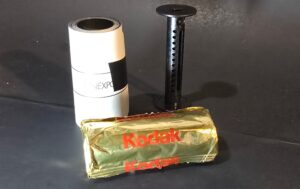
    By the early 1880s, Eastman had made a breakthrough that would transform the industry. He developed the first roll film, a flexible, paper-based material that would replace the heavy glass plates used for each exposure. This roll film could be preloaded into a camera, allowing photographers to take multiple exposures in succession without needing to handle or replace individual plates. Eastman’s innovation was revolutionary in that it drastically reduced the weight and complexity of photographic equipment, making it feasible for the first time to envision a truly portable camera.

    Roll film not only freed photographers from the constraints of glass plates but also streamlined the entire photographic process. The ability to carry a roll of film rather than individual plates enabled longer, more convenient shooting sessions and eliminated the need for a darkroom at every location. Eastman’s invention marked the first major step toward simplifying photography, bringing it closer to a point where it could be enjoyed by a wider audience. His work laid the groundwork for a new era in photography, setting the stage for the development of the Kodak camera and the transformative impact it would have on public access to photography.

    The Kodak Camera and the Birth of Popular Photography

    In 1888, George Eastman unveiled a device that would redefine photography: the Kodak camera. This camera, preloaded with Eastman’s innovative roll film, represented a significant leap in accessibility and ease of use. For the first time, photographers no longer needed to handle individual glass plates or understand the chemical intricacies of photographic development. The Kodak camera arrived fully loaded with roll film that allowed for one hundred exposures, after which the entire camera could be sent back to Eastman’s company for film processing. Eastman’s team would develop the film, make prints, and reload the camera, all of which spared users from needing any technical knowledge beyond simply aiming the camera and pressing a button.

    Eastman’s marketing of the Kodak was equally revolutionary. With the slogan, “You press the button, we do the rest,” he positioned photography as an activity that anyone could enjoy. Photography was no longer an endeavor that demanded significant technical skill or specialized equipment. Instead, Eastman transformed it into a pastime that was straightforward and enjoyable, opening it up to a vastly larger audience. By marketing the Kodak as a simple, all-inclusive service, Eastman invited people from all walks of life to embrace photography, framing it as an opportunity for creativity and personal expression rather than as a highly skilled craft.

    The Kodak camera also ushered in a new era of visual storytelling, empowering people to document personal moments, daily life, and travel in ways that had previously been impossible for amateurs. For the first time, ordinary people could preserve family gatherings, vacations, and everyday scenes, creating a personal visual history that would have been unthinkable in the era of glass plates. This shift had profound cultural implications. Photography began to move beyond the confines of formal, posed studio portraits and became an informal, spontaneous means of capturing life as it unfolded. The Kodak camera democratized the medium, allowing individuals to record their own stories and surroundings without the technical barriers that had previously limited photography to professionals and elites.

    With the Kodak, Eastman had not only revolutionized the technical side of photography but had also reshaped its cultural role. By transforming photography into an accessible and enjoyable activity, he enabled a broad spectrum of people to document their lives and experiences, creating a legacy of visual documentation that would shape personal and collective memory for generations to come.

    The Social Transformation of Photography

    George Eastman’s innovations fundamentally altered the landscape of photography, breaking down the social and economic barriers that had previously kept it exclusive to professionals and wealthy enthusiasts. By simplifying the photographic process and making it affordable, Eastman opened the door for amateurs to participate. No longer a highly specialized skill limited to those with technical training and expensive equipment, photography became accessible to a wide audience. With the introduction of the Kodak camera, photography was transformed from an exclusive practice into a popular pastime that anyone could enjoy, regardless of background or income. This shift effectively democratized photography, enabling individuals from various social classes to explore and document their lives through the lens.

    The Kodak camera’s ease of use also paved the way for photography to become a meaningful part of family life and social gatherings. For the first time, families could capture candid moments and record everyday relationships in their own homes and communities. Birthdays, holidays, and vacations could be documented casually, preserving scenes and interactions that would otherwise have been lost to memory. Photography took on a new role as a social activity, woven into the fabric of daily life. By making it possible for people to capture and share their personal experiences, Kodak helped create a culture in which family albums and personal photographs became cherished mementos of shared memories and milestones.

    This surge in amateur photography also catalyzed a significant expansion in the photography industry. As demand for photographic services grew among the general public, a new market emerged that extended beyond the professional studios that had traditionally catered to the elite. Photo studios began to cater specifically to middle-class families, offering portraits and printing services to customers who, thanks to Kodak’s innovations, were increasingly likely to own and use their own cameras. Eastman’s vision of accessible photography spurred the growth of an industry that supported a wider array of products and services, including processing, printing, and accessories designed for the burgeoning base of amateur photographers.

    Eastman’s roll film and Kodak camera thus not only democratized photography but also reshaped the economy surrounding it, giving rise to a thriving consumer market that reinforced photography’s role in everyday life. By the end of the 19th century, photography had evolved from a professional craft into a popular, accessible means of documenting the world, laying the groundwork for its central place in modern culture.

    The Lasting Impact of Kodak and the Evolution of Photography

    The widespread availability of the Kodak camera and roll film in the late 19th century brought about a fundamental change in the nature of photography itself. No longer limited by the cost, complexity, and formality of glass plate photography, people began to capture moments spontaneously and informally. Photographs shifted from carefully staged studio portraits to candid snapshots that celebrated the everyday. Families, friends, and ordinary scenes became the subjects of photos, emphasizing moments that were personal and often intimate. This new approach allowed individuals to express themselves visually in ways that were previously unimaginable, creating a genre of photography centered around the beauty of life’s unscripted moments.

    As photography became more accessible, it also began to serve as a powerful means of personal documentation, transforming both personal and public memory. With a Kodak camera in hand, people could now capture not only significant life events but also the mundane aspects of daily existence—the streets they walked, the places they visited, the gatherings they enjoyed, and the fleeting moments that defined their days. Photography became a method of chronicling both the monumental and the mundane, allowing individuals to construct a visual narrative of their lives. This expanded view of what was “worth” documenting shifted public memory as well, capturing a more holistic image of society at the turn of the century. It was no longer just the wealthy or famous whose lives were preserved in photographs; the everyday lives of ordinary people now filled family albums and cultural archives, preserving a broader spectrum of human experience.

    The cultural legacy of George Eastman’s innovations is profound. By removing the technical and economic barriers to photography, Eastman laid the foundation for photography as a ubiquitous part of modern life. He democratized the medium, allowing people from all walks of life to engage in visual storytelling and enabling future generations to see themselves and their ancestors through authentic images. The Kodak camera and roll film marked the beginning of photography as a form of mass communication, laying the groundwork for photography’s central role in art, journalism, personal documentation, and, eventually, digital media. Today, when photography is as simple as a click on a smartphone, we see the enduring impact of Eastman’s vision: photography is a universal language, woven into the fabric of daily life, and an indispensable tool for preserving and sharing our stories.

    In opening photography to the masses, Eastman not only changed the way we capture our experiences but also transformed our relationship with memory and history, enabling a form of self-expression and personal legacy that continues to shape our understanding of the past and the present.

  • The Wet Plate Era: Collodion Process and Ambrotypes (1850s–1880s)

    The Wet Plate Era: Collodion Process and Ambrotypes (1850s-1880s)

    There is something quietly radical about the idea that ordinary people, for most of human history, left no image of themselves behind. Kings got portraits. Everyone else got a gravestone, if they were lucky. Then, in the span of a few decades in the mid-19th century, that changed — and it changed because a handful of chemists figured out how to make light do the remembering.

    This is the story of the wet plate era: a period roughly spanning the 1850s through the 1880s when photography stopped being a curiosity for the wealthy and started becoming something closer to a human right.

    The Collodion Process: Chemistry as Craft

    The technology at the center of all this was invented in 1851 by Frederick Scott Archer, and it was called the wet plate collodion process. The name sounds dry. The actual practice was anything but.

    Here is what a photographer had to do to take a single photograph:

    First, coat a clean glass plate with collodion — a viscous, faintly sweet-smelling solution of guncotton dissolved in ether and alcohol. Get the coating even. Then, while it is still wet, immerse the plate in a bath of silver nitrate to make it light-sensitive. Load it into the camera while it is still wet. Expose it. Rush it back to the darkroom — you have roughly ten to fifteen minutes before the collodion dries and the plate becomes useless. Develop it with iron sulfate or pyrogallic acid. Fix it with sodium thiosulfate or, if you were feeling cavalier about your continued existence, potassium cyanide. Finally, varnish it to protect the surface.

    Every photograph taken this way was a small performance under pressure, conducted partly in the dark, surrounded by flammable and toxic chemicals. The photographers who mastered it were part scientist, part artisan, and part person who was comfortable with a great deal of controlled chaos.

    What they got in return was worth it. The collodion process produced images of remarkable sharpness and detail. It required far shorter exposure times than the daguerreotype, which meant portrait subjects no longer had to hold perfectly still for uncomfortably long stretches. And crucially, it produced negatives — which meant a single session could yield multiple prints. Photography had become reproducible.

    Two Formats, Two Audiences

    The collodion process was versatile enough to branch into two distinct photographic formats. Both relied on the same chemistry. Both served different needs.

    Ambrotypes were patented in 1854 by James Ambrose Cutting. The technique involved deliberately underexposing the collodion plate, producing a faint, translucent image that, when placed against a dark background — black velvet or lacquer — appeared as a positive. The result had a particular quality to it: soft, intimate, slightly ethereal. Ambrotypes were typically housed in small ornate cases, handled carefully, kept close. They were keepsakes in the truest sense, meant to be held and looked at privately.

    Tintypes — also called ferrotypes or melainotypes — took the same basic approach but swapped the glass plate for a thin sheet of iron coated in dark lacquer. The resulting images were not as delicate or luminous as ambrotypes. They had a grainy, matte quality that lent them a certain directness, a sense of being exactly what they were without apology.

    What tintypes lost in refinement, they more than made up for in resilience and cost. They did not break. They were cheap to produce. During the American Civil War, soldiers carried them in their pockets and sent them home to families who might not see them again. At carnivals and street fairs, itinerant photographers made tintypes in minutes for people who had never owned an image of themselves before and might not again.

    That matters. It is easy to look at 19th century photographs now and see only the stiff poses and formal clothing and miss what was actually happening: millions of ordinary people, for the first time in history, being seen and recorded as individuals.

    The Longer Arc

    The wet plate era did more than expand access to portraiture. It accelerated a set of changes that reshaped what photography could be and do.

    Larger plate sizes allowed for more detailed, expansive compositions. Faster lenses reduced exposure times further. Portable darkrooms, sometimes housed in horse-drawn wagons, allowed photographers to move through the world — to document wars, landscapes, and everyday life far from any studio. The technology followed the ambition.

    There is also the matter of aesthetics. The wet plate process produces images with a particular character: sharp focus, rich tonal range, and a kind of imperfection that is impossible to replicate digitally — uneven coatings, slight vignetting, the occasional bubble or streak left by the process itself. These are not flaws so much as evidence of the hand behind the image. Contemporary photographers have noticed. The wet plate process has experienced a genuine revival, practiced by artists drawn to its slowness, its unpredictability, and the tactile reality of an image that exists as a physical object rather than a file.

    There is something to that. In an age when images are produced and discarded in quantities that would have been incomprehensible to a 19th century photographer, there is a quiet argument being made by anyone who still coats a glass plate by hand: that some things are worth the time and the care it takes to do them properly.


    Three Tune Tuesday explores contemporary issues through the lens of music recorded before 1926. If you found this interesting, you might enjoy our podcast — and if you want more like this in your inbox, consider joining the Blind Skeleton mailing list.

  • International Film Movements: Cinema as Revolution

    How German Expressionism, Soviet Montage, and Italian Neorealism reshaped the language of film

    Introduction: When Cinema Became a Mirror

    By the 1920s, cinema had evolved far beyond its early days as a fairground curiosity. It was no longer enough to simply capture motion or tell a story—filmmakers began asking deeper questions. What could film say about society? How could the camera reveal psychological truth? Could editing itself become a form of argument?
    Across Europe, three distinct movements emerged that would fundamentally reshape cinema’s artistic vocabulary: German Expressionism, with its twisted architecture and nightmarish psychology; Soviet Montage, which turned editing into a weapon of intellectual and emotional persuasion; and Italian Neorealism, which dragged the camera out of the studio and into the rubble-strewn streets of postwar life.

    These weren’t just aesthetic choices—they were responses to crisis. Each movement reflected the turbulent social, political, and economic conditions of its time and place. And each contributed techniques, philosophies, and visual languages that would echo through cinema for generations, from Hollywood noir to French New Wave, from Hitchcock’s suspense to contemporary art house cinema.

    German Expressionism: The Architecture of Anxiety

    In the wake of World War I, Germany was a nation in crisis. Defeat, economic collapse, political instability, and social trauma created a landscape of deep unease. German cinema, particularly during the Weimar Republic era (1919–1933), channeled this anxiety into a radical visual style that distorted reality to reveal psychological truth.

    German Expressionism rejected naturalism entirely. Instead of filming the world as it appeared, filmmakers constructed fantastical, stylized environments where walls leaned at impossible angles, shadows stretched into claws, and light and dark battled for dominance. These weren’t just artistic flourishes—they were visual metaphors for a society grappling with madness, guilt, and paranoia.

    The quintessential example is Robert Wiene’s The Cabinet of Dr. Caligari (1920), a film where painted sets create a twisted, nightmarish world. Every corner is sharp, every alley crooked, every shadow ominous. The film’s revelation—that its narrator is unreliable, possibly insane—makes the distorted visuals retroactively meaningful. We’re not just watching a horror story; we’re seeing the world through a fractured mind.

    But Expressionism wasn’t confined to horror. Fritz Lang, one of the movement’s towering figures, brought its visual language to science fiction with Metropolis (1927). A sprawling epic set in a dystopian future city, Metropolis used monumental architecture, stark geometric designs, and sharp contrasts between light and shadow to explore class struggle and dehumanization under industrial capitalism. The film’s underground workers labor in hellish conditions while the elite live in gleaming towers—a visual metaphor made literal through production design.

    Lang’s M (1931) brought Expressionism into the sound era, using off-screen sound, haunting whistles, and shadowy cinematography to build unbearable tension around a child murderer stalking the streets of Berlin. The film pioneered techniques still used in thrillers today: the unseen menace, the subjective camera, the use of sound to amplify dread.

    German Expressionism influenced film noir, horror cinema, and any genre that uses visual style to externalize inner turmoil. Its legacy is in every shadow that seems too dark, every angle that feels too severe, every set that hints at psychological unease. When the Nazis came to power, many of these filmmakers—including Lang—fled to Hollywood, bringing Expressionist techniques with them and transforming American cinema in the process.

    Soviet Montage: Editing as Argument

    While German filmmakers were distorting space, Soviet filmmakers were revolutionizing time. In the aftermath of the 1917 Bolshevik Revolution, cinema became a tool of ideological education and propaganda. But rather than simply filming speeches or staging patriotic dramas, Soviet directors discovered that the real power of cinema lay in editing—in the collision of images.

    Soviet Montage theory, championed by filmmakers like Sergei Eisenstein and Dziga Vertov, proposed that meaning was created not within individual shots, but in the relationship between them. Two images placed side by side could generate ideas, emotions, and arguments that neither image contained on its own. This was montage as dialectic—thesis, antithesis, synthesis—translated into cinematic form.

    Sergei Eisenstein, the movement’s most famous theorist and practitioner, demonstrated this principle brilliantly in Battleship Potemkin (1925). The film dramatizes a 1905 naval mutiny, but its most famous sequence—the Odessa Steps massacre—is a masterclass in rhythmic editing. Shots alternate rapidly between fleeing crowds, advancing soldiers, a baby carriage tumbling down stairs, and faces contorted in terror. The sequence doesn’t just show violence; it builds to an emotional crescendo through the accumulation and collision of images.

    Eisenstein called this “montage of attractions”—assembling shots in ways that provoke visceral, emotional responses. He wasn’t interested in seamless continuity; he wanted each cut to jolt the viewer, to make them think and feel simultaneously. His later films, including October (1928) and Alexander Nevsky (1938), continued refining these ideas, using editing to create visual metaphors and political allegories.

    Dziga Vertov, meanwhile, pushed montage in a more experimental direction with Man with a Movie Camera (1929), a documentary that celebrates urban modernity through dizzying juxtapositions of machines, workers, and daily life. The film has no narrative, no intertitles, no actors—just pure cinema, assembled from fragments of reality and transformed through editing into a rhythmic symphony of movement.

    The Soviets believed editing could educate audiences, training them to make intellectual connections and see the world dialectically. While their work was rooted in propaganda, the techniques they developed—cross-cutting, rhythmic montage, associative editing—became foundational to filmmaking worldwide. Every action sequence, every music video, every montage sequence in modern cinema owes something to these early Soviet experiments.

    By the 1930s, Stalin’s crackdown on artistic freedom curtailed the movement’s innovations, but its influence had already spread far beyond Soviet borders, shaping how directors from Hitchcock to Godard thought about the power of the cut.

    Italian Neorealism: Cinema in the Rubble

    If German Expressionism was about distorting reality and Soviet Montage was about restructuring it, Italian Neorealism was about confronting it head-on—unvarnished, unromanticized, and unavoidable.

    In the aftermath of World War II, Italy was devastated. Cities lay in ruins, economies had collapsed, and fascism’s fall left a moral and political vacuum. Studio facilities had been damaged, film stock was scarce, and professional actors were hard to come by. But rather than wait for conditions to improve, a generation of filmmakers took to the streets with whatever resources they had. What emerged was a cinema of immediacy, authenticity, and profound humanism.

    Italian Neorealism rejected the glossy artifice of Hollywood and the stylized symbolism of prewar European art cinema. Instead, filmmakers shot on location, often using non-professional actors, natural lighting, and stories drawn from everyday life. The camera didn’t impose itself on reality—it witnessed it.

    Roberto Rossellini‘s Rome, Open City (1945) is often cited as the movement’s first masterpiece. Shot during and immediately after the Nazi occupation of Rome, the film tells the story of resistance fighters struggling against fascism. Its rough, documentary-like quality wasn’t just an aesthetic choice—it was a necessity. Resources were scarce, so Rossellini improvised, filming in actual bombed-out buildings with a mix of professional and non-professional actors. The result feels urgent and real in ways that polished studio productions never could.

    Vittorio De Sica, another towering figure of the movement, brought Neorealism to its emotional and political peak with Bicycle Thieves (1948). The film follows an unemployed man desperately searching for his stolen bicycle—the only thing that allows him to work. There are no villains, no melodrama, no easy resolutions. Just a man, his son, and the grinding indignity of poverty. De Sica cast non-actors in the lead roles, shot entirely on location in Rome, and crafted a narrative that feels less like fiction and more like observed truth.

    The power of Bicycle Thieves lies in its simplicity and restraint. It doesn’t shout about injustice—it simply shows it, allowing audiences to draw their own conclusions. The film’s final shot—a father and son disappearing into a crowd, their dignity bruised but not broken—is one of cinema’s most quietly devastating moments.

    Other Neorealist films, like Luchino Visconti’s La Terra Trema (1948) and De Sica’s Umberto D. (1952), continued exploring themes of economic hardship, social inequality, and the resilience of ordinary people. These weren’t escapist fantasies—they were mirrors held up to a society still piecing itself together.

    By the mid-1950s, as Italy’s economy recovered, Neorealism began to fade. Studios reopened, audiences craved lighter fare, and filmmakers moved toward more stylized, psychological storytelling. But the movement’s influence was profound. Neorealism’s emphasis on location shooting, naturalistic performance, and social engagement would inspire filmmakers worldwide—from the French New Wave to the cinema of developing nations seeking to tell their own stories outside Hollywood’s shadow.

    Cultural Impact and Global Influence

    The significance of these three movements extends far beyond their immediate historical contexts. German Expressionism, Soviet Montage, and Italian Neorealism didn’t just produce important films—they expanded cinema’s grammar, proving that film could be as intellectually rigorous, socially engaged, and artistically ambitious as literature, theater, or painting.

    German Expressionism laid the groundwork for psychological cinema. Its visual distortions, atmospheric lighting, and subjective camera work became staples of film noir, horror, and suspense. When Alfred Hitchcock crafted the nightmarish set pieces of Vertigo (1958) or the shadowy paranoia of The Third Man (1949), they were drawing directly from Expressionist traditions. Even contemporary filmmakers like Tim Burton, Guillermo del Toro, and Robert Eggers owe debts to those early German masters who understood that reality could be bent to reveal deeper truths.

    Soviet Montage revolutionized how we understand editing. Before Eisenstein and Vertov, cutting was largely functional—a way to change scenes or compress time. They proved that editing could be expressive, intellectual, and emotional. This insight influenced not just narrative cinema but also experimental film, music videos, and even digital media. Every rapid-fire action sequence, every music-driven montage, every moment when meaning emerges from the clash of images—those are echoes of Soviet innovation.

    Italian Neorealism changed what stories cinema could tell and how it could tell them. By stripping away studio artifice and focusing on ordinary lives, Neorealist filmmakers demonstrated that authenticity and emotional truth didn’t require stars, sets, or big budgets. This philosophy inspired the French New Wave, British Kitchen Sink realism, and socially conscious cinema across Latin America, Africa, and Asia. Directors like Satyajit Ray in India, Ousmane Sembène in Senegal, and the Dardenne Brothers in Belgium all drew from Neorealism’s well of humanistic, location-based storytelling.

    These movements also reflected the political and social upheavals of their times. German Expressionism emerged from the trauma and instability of Weimar Germany, visualizing a society on the edge of collapse. Soviet Montage was born from revolutionary fervor, turning cinema into a tool for ideological education and mass mobilization. Italian Neorealism rose from the ashes of war, bearing witness to suffering while affirming human dignity in the face of hardship.

    In each case, cinema became more than entertainment—it became a form of cultural testimony, a way of processing collective trauma, and a means of imagining different futures. These filmmakers didn’t just document history; they interpreted it, transforming raw experience into lasting art.

    Movements That Moved the World

    German Expressionism, Soviet Montage, and Italian Neorealism weren’t just phases in film history—they were revolutions. Each emerged from specific cultural and political conditions, yet each transcended those origins to reshape how the entire world makes and watches movies.

    They taught us that shadows could speak, that cuts could argue, and that truth could be found in the streets as much as in studios. They proved cinema wasn’t limited to escapism or spectacle—it could grapple with psychology, politics, and social reality with as much depth and nuance as any other art form.

    Today, their influence is everywhere. When a horror film plunges us into subjective dread, that’s Expressionism. When an action sequence builds intensity through rhythmic editing, that’s Montage. When a film shoots on location with non-actors to capture lived experience, that’s Neorealism.

    These movements remind us that cinema, at its best, is both a reflection of its moment and a conversation across time. The questions they asked—How can film reveal inner life? How can editing shape thought? How can cinema bear witness to reality?—are questions filmmakers are still answering, frame by frame, cut by cut, story by story.

    The legacy of these pioneers lives on every time a filmmaker picks up a camera not just to entertain, but to see—and to help us see more clearly as well.

  • Beyond Edison and Bell: The Evolution of the First Disc Records

    Wax Cylinders: The Early Days

    Thomas Edison’s phonograph, patented in 1878, and Alexander Graham Bell’s graphophone kicked off sound recording with wax cylinders as the medium. These tinny tubes captured voices and music like trapped spirits, a true marvel after centuries of silence.

    Yet their flaws were glaring. Cylinders were bulky, prone to breakage, and a nightmare for duplication—each copy meant painstaking re-recording. Storage? Imagine teetering stacks in dusty attics. Mass production stayed a pipe dream, limiting reach to the elite few with phonographs.

    Emile Berliner’s Flat-Disc Breakthrough

    Emile Berliner, German-born inventor, flipped the script in 1887 with his gramophone patent. Screw the cylinders: flat shellac discs were born—stackable, shippable, and primed for factories. His debut 5-inchers held mere minutes of audio, scratchy as a ghost’s whisper, but practicality shone through.

    Early discs weren’t flawless; sound quality trailed wax at first, and adoption lagged against entrenched cylinder giants. Berliner persisted, eyeing the commerce cylinders couldn’t touch.

    Refinements and the Berliner Gramophone Company

    By 1894, Berliner launched the Berliner Gramophone Company to champion discs. He scaled to 7-inch formats, squeezing in 2-3 minutes per side—enough for a full song. Shellac became the star: resin blended with slate dust and cotton flock for records tough as history itself, outlasting fragile wax.

    Mass production revolutionized everything. Flat discs stamped out like postage, slashing costs and sparking commerce. Berliner’s label dove into ragtime, marches, vaudeville—diversifying grooves before “genres” was a buzzword. Cylinders faded; discs dominated parlors worldwide.

    A Lasting Legacy

    Berliner’s flat-disc vision birthed the record industry we know, evolving through vinyl, cassettes, CDs, and streams.

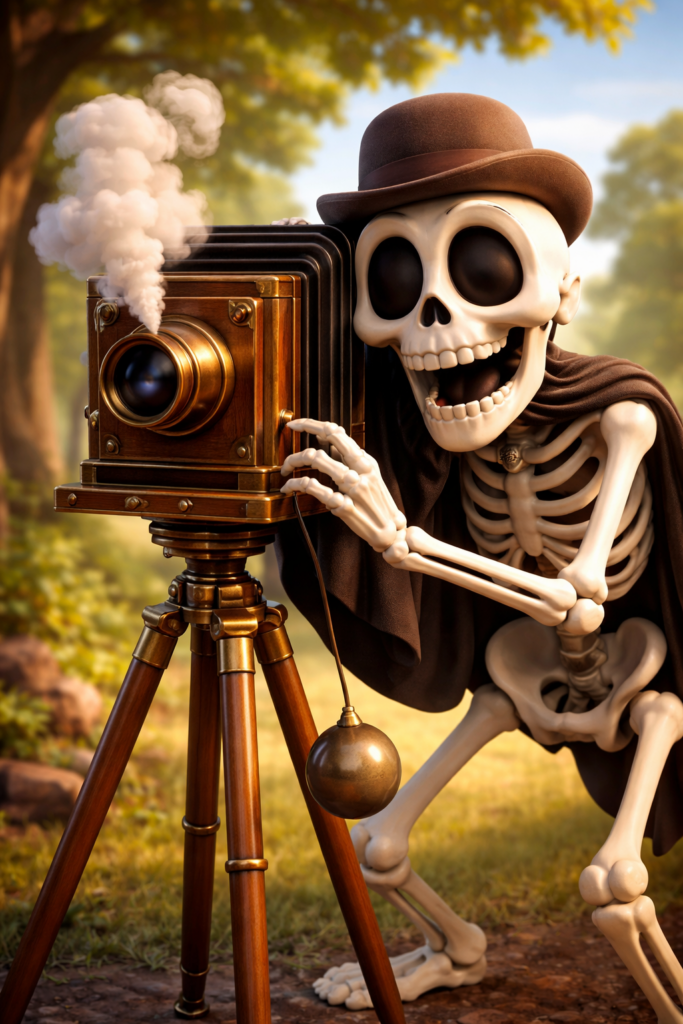
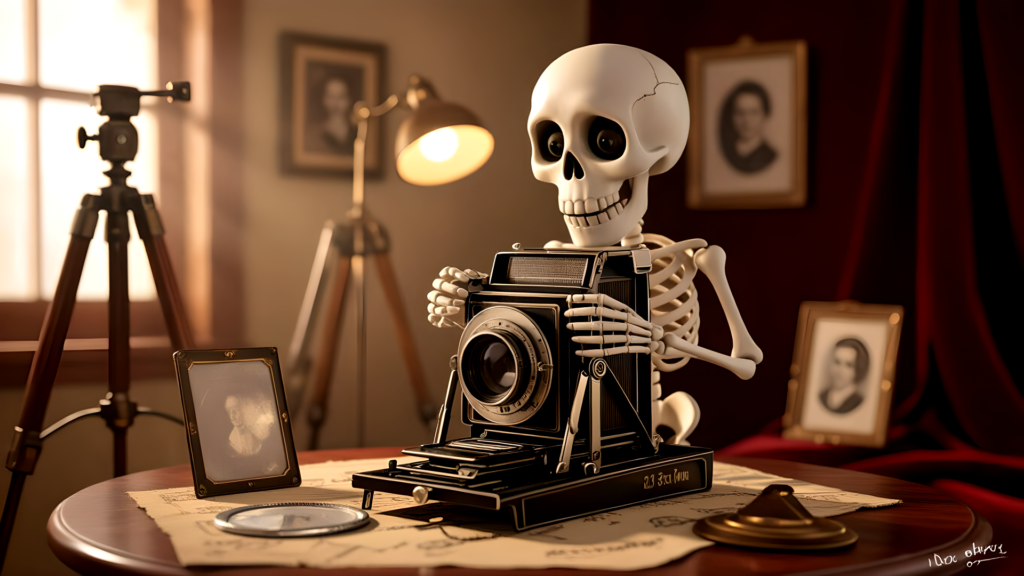
    Next Three Tune Tuesday, as a 1905 shellac spins tales from the crypt, tip your cap to Emile. He democratized music, turning phonographs into people’s portals. His practical genius echoes in every needle drop.(see the generated image above)

  • The Societal Impact of Early Photography

    The Era of Daguerreotypes

    Changing Perceptions

    How Early Photography Altered the Way People Viewed Themselves—and the World

    When early photography arrived—especially the daguerreotype—it quietly rewired how people understood themselves and their place in the world. Before this moment, having your likeness preserved was largely a privilege of wealth. If you wanted a portrait, you commissioned a painter, and painters did what painters have always done: they softened edges, flattered faces, and told a slightly better story than reality strictly allowed.

    Photography didn’t do that. Or at least, not at first.

    The daguerreotype offered something startlingly new: a way to be seen as you actually were. Lines, posture, uncertainty, pride—it all came through. And suddenly, this wasn’t just for the elite. Ordinary people could sit still for a few long seconds and walk away with proof that they existed, that they mattered, that their face was worth remembering.

    That mattered more than we often give it credit for.

    For the first time, families could preserve not just names and stories, but faces. Real ones. The result was a deeper, more intimate connection to memory. A photograph wasn’t an interpretation—it was a moment, frozen and handed forward to people not yet born.

    The Rise of Portrait Photography

    As portrait photography spread, it quietly became one of the most important historical record-keeping tools we’ve ever invented. Daguerreotypes didn’t just capture individuals; they captured class, fashion, confidence, exhaustion, hope. They recorded people who would never appear in history books, but who nevertheless lived full, complicated lives.

    These images now serve as windows. Hairstyles, clothing, posture, even expressions tell us how people wanted—or didn’t want—to be seen. Taken together, early portraits form a visual archive of everyday humanity. Not kings and generals, but shopkeepers, children, laborers, couples trying to look calm while holding very still.

    Accessibility and the Slow March Toward Democratization

    Early photography wasn’t cheap or easy. Sitting for a daguerreotype took time, patience, and money. But technology has a habit of shrinking barriers. As photographic processes improved and equipment became more practical, photography drifted out of elite studios and into the reach of the middle class.

    This shift mattered enormously. Photography stopped being a novelty and became a habit. A way of marking time. A way of saying: this happened.

    With new processes and more portable equipment, photography became something people used, not just something they observed. It turned into a tool for identity, memory, and expression—and once that door opened, it never really closed again.

    Photography Steps Into the World

    It didn’t take long for photographers to realize they weren’t limited to studios. Cameras went outside. Into streets, battlefields, factories, gatherings, and moments of upheaval. Photography became a witness.

    For the first time, the public could see events rather than just read about them. This changed journalism permanently. Images carried emotional weight that words alone rarely could. They shaped opinion, stirred empathy, and created shared reference points for society at large.

    Art, Anxiety, and Adaptation

    Not everyone welcomed photography with open arms. Painters, especially portrait artists, understandably worried. If a machine could capture reality faster and cheaper, where did that leave them?

    But art has always evolved alongside new tools. Many artists didn’t fight photography—they used it. Photographs became references, studies of light and composition, aids rather than enemies. In doing so, both mediums grew. Painting leaned into interpretation and abstraction. Photography explored realism, mood, and eventually, artistry in its own right.

    Early Photographs as Time Machines

    Today, daguerreotypes feel almost magical. Tiny, reflective, fragile—they demand attention. When you look at one, you’re not just seeing an image. You’re standing face-to-face with someone who had no idea you’d ever exist.

    These photographs have become precious historical artifacts not because they’re rare, but because they’re honest. They preserve the mundane alongside the monumental. They show us how people lived, dressed, loved, and endured.

    Closing Thoughts

    Early photography changed everything. It shifted power, widened access, and redefined how memory works. It allowed people to see themselves clearly—and to be seen by others, long after they were gone.

    The daguerreotype didn’t just capture images. It captured humanity in transition: stepping into modernity, blinking slightly at the light, and holding still just long enough to be remembered.

    And honestly? We’re still living in the shadow of that moment.

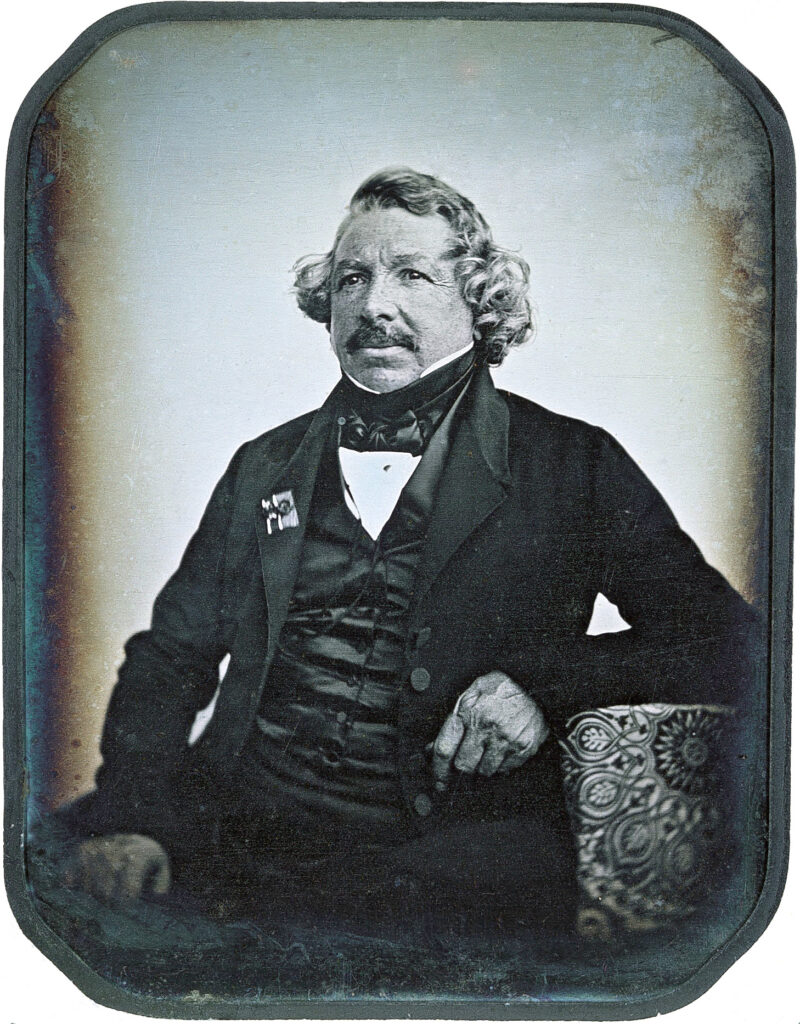
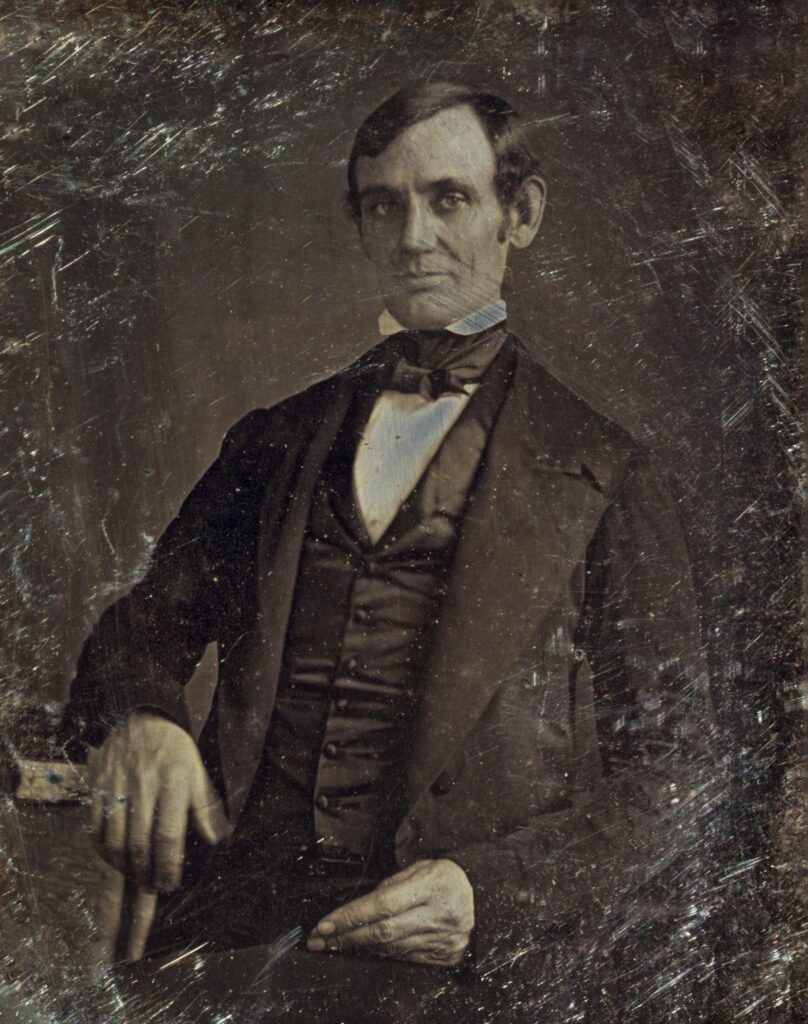
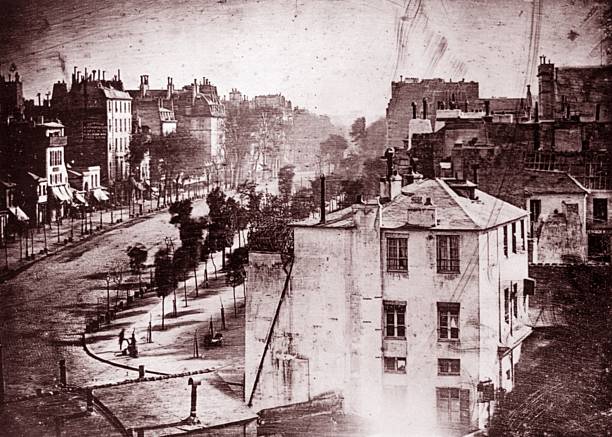
    Early Daguerrotypes

    By Jean-Baptiste Sabatier-Blot – [1], Public Domain, https://commons.wikimedia.org/w/index.php?curid=3112794
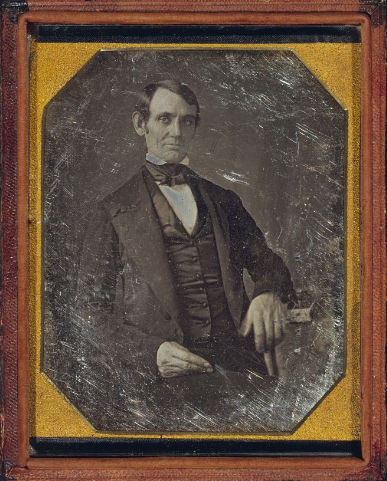
    By Attributed to Nicholas H. Shepherd, based on the recollections of Gibson W. Harris, a law student in Lincoln’s office from 1845 to 1847. – Library of Congress, Public Domain, https://commons.wikimedia.org/w/index.php?curid=25071089
  • From Tinfoil to Wax: The Evolution of Phonograph Cylinders

    When Sound Learned to Haunt: The Rise (and Fall) of the Phonograph Cylinder

    We live in a world where music is weightless, invisible, and summoned with a thumb twitch. It’s efficient. It’s convenient. It’s also a little bloodless.

    Before sound lived in clouds and algorithms, it lived in objects—fragile ones. Wax. Metal. Things that wore out, cracked, and failed. And one of the strangest, most beautiful of those objects was the phonograph cylinder: awkward, temporary, and utterly revolutionary.

    This is the story of how sound first learned to stick around.

    Tin Foil and Lightning in a Bottle

    In 1877, Thomas Edison unveiled something that felt less like engineering and more like sorcery. His phonograph could do two things no machine had ever reliably done before: capture sound and play it back.

    The medium? A rotating cylinder wrapped in tin foil. A stylus scratched vibrations into the surface. Crank it again, and the machine spoke back.

    People didn’t quite believe it. Public demonstrations were met with awe, suspicion, and occasional accusations of fraud. Voices coming out of a machine? Preposterous. Witchcraft, possibly.

    The tin-foil cylinder was astonishing—and terrible. It wore out almost immediately. Each recording was a one-off. Play it a handful of times and it collapsed into metallic mush. Sound quality was… generous to call “sound-adjacent.”

    But it worked. And that was enough.

    Tin foil wasn’t the future—it was proof that a future existed.

    Wax Makes It Real

    Enter Alexander Graham Bell, along with Chichester Bell and Charles Sumner Tainter, who took Edison’s noisy miracle and made it practical. By the 1880s, tin foil gave way to wax, and the Graphophone was born.

    Wax cylinders captured more detail, more warmth, more life. Voices sounded human. Instruments stopped fighting each other. The machine didn’t just repeat sound—it remembered it.

    Even better, wax could be refined, shaved, reused, and eventually molded. By the turn of the century, recordings could be duplicated. For the first time, sound could be mass-produced.

    That’s not a technical footnote. That’s an earthquake.

    Companies like Edison Phonograph Company and Columbia Records built catalogs. Musicians became recording artists. Music stopped being something you had to be present for.

    Sound went portable. Fame followed.

    The Birth of Home Listening (and Everything That Came After)

    Wax cylinders quietly rewired society.

    You no longer needed a concert hall. Or a theater. Or a performer in the room. Music entered living spaces—parlors, apartments, boarding houses. The phonograph became furniture. Entertainment became domestic.

    Artists reached audiences they would never meet. Families mailed each other voices. Politicians, educators, preachers, and hucksters all found uses for recorded sound. Language lessons. Poetry readings. Historical speeches. Therapy, even—long before anyone called it that.

    This was the moment sound stopped being fleeting. It could now outlive the speaker.

    A Slow Fade into the Archives

    Wax cylinders didn’t die in a dramatic blaze. They were simply… out-engineered.

    Flat discs were cheaper, tougher, easier to stack and ship. Playback times increased. Gramophones took over. By the early 20th century, cylinders were already becoming obsolete.

    They lingered in offices and niche uses, then slipped quietly into history, but they didn’t quite vanish.

    Today, wax cylinders sit in archives and museums, humming faintly with the past. They hold voices no one alive has ever met. Accents that no longer exist. Songs that were never written down. They are among the earliest true audio time capsules we have.

    Modern engineers now digitize them—not to replace them, but to save what they contain before time finishes the job.

    Why They Still Matter

    Wax cylinders didn’t just start an industry. They forced us to ask questions we’re still arguing about:

    • Who owns a recording?
    • Who gets paid?
    • What does it mean to preserve a performance?

    They helped invent copyright law, home entertainment, recorded journalism, and the idea that art could be both intimate and mass-distributed. Most of all, they remind us that sound was once physical. Vulnerable. Temporary. A thing you could drop, damage, or lose forever.

    In an age of infinite copies and disposable playlists, there’s something grounding about that.

    The wax cylinder wasn’t perfect. It wasn’t durable. It wasn’t convenient. But it was human.

    And everything we listen to today—every stream, every download, every perfectly preserved digital file—still traces its lineage back to those fragile spinning ghosts of sound.

    Not bad for a lump of wax.

  • The Invention of the Phonograph

    Record Players, as they are called today, have a history that dates back to the 19th century. Phonographs, as they were known then, are popularly regarded as playing flat disc records that spun at a rate of 78rpm. Truthfully, though, the original phonographs were even more different than that.

    The phonograph is generally considered to have been invented in 1877 by Thomas Edison, an American inventor and entrepreneur who was also known for his work on the telegraph and the light bulb. Instead of a flat disk, however, Edison’s phonograph used a rotating cylinder covered with tin foil, on which a stylus engraved sound vibrations as the cylinder was turned by a hand crank. A second stylus could then trace the same groove and reproduce the sound through a horn or earphones.

    Edison’s phonograph was a sensation when he demonstrated it to the public, but it had some limitations. The tin foil was fragile and could only be played a few times before it wore out. The sound quality was also poor and distorted. Edison soon moved on to other projects and did not improve his phonograph for several years.

    Meanwhile, other inventors were working on their own versions of the phonograph. One of them was Alexander Graham Bell, the Scottish-born inventor of the telephone. Bell and his associates at the Volta Laboratory in Washington, D.C., made several improvements to Edison’s design in the 1880s. They introduced the graphophone, which used wax-coated cardboard cylinders instead of tin foil. The wax cylinders were more durable and could be recorded over by shaving off the old sound. They also used a cutting stylus that moved from side to side in a zigzag groove around the cylinder, instead of up and down as in Edison’s phonograph. This reduced the friction and improved the sound quality.

    The graphophone was patented by Bell and his partners in 1886, and they formed a company to market it. They initially focused on business applications, such as dictation and transcription, rather than entertainment. They also faced competition from Edison, who resumed his work on the phonograph in 1887 and introduced his own wax cylinders and improved machines. The two companies eventually merged in 1890 to form the North American Phonograph Company, which controlled most of the phonograph market in the United States.

    The invention of the phonograph was a major milestone in the history of sound recording. It paved the way for later developments, such as disc records, gramophones, record players, turntables, and more. The phonograph also had a profound impact on culture and society, as it enabled people to listen to music, speeches, stories, and other sounds at their own convenience and preference.

  • The Cyanotype

    Cyanotypes: The Blueprints of Sunlight and Curiosity

    If the daguerreotype was early photography’s dramatic leading actor—mercury fumes, silver plates, a flair for the theatrical—then the cyanotype was its quietly brilliant cousin who showed up with a stack of papers, a jar of chemicals, and the attitude of someone who fully trusts the sun to handle things.

    The cyanotype was invented in 1842 by Sir John Herschel, a man whose résumé reads like he collected new disciplines the way some people collect stamps. Astronomy? Yes. Chemistry? Of course. Inventing words like photograph and negative that shaped the entire medium? Naturally. And somewhere in the middle of all that, he gifted the world a photographic process that turned everything a rich, unmistakable blue.

    It didn’t make Herschel famous—frankly, he already had that covered—but it made an indelible mark on photographic history and gave artists a color so iconic you can spot it from across the room.

    Why Cyanotypes Are So… Blue

    The magic of the cyanotype comes down to iron salts and sunlight—two ingredients that sound suspiciously like something a Victorian tinkerer might keep on a high shelf and forget to label.

    When ferric ammonium citrate meets potassium ferricyanide, you get a photosensitive coating that reacts to UV light. You brush this greenish solution onto paper, let it dry somewhere dim, and suddenly your page is ready to record whatever you place on it: a fern, a feather, a photograph, or whatever random object you grabbed because the sun was finally out and you felt impatient.

    Expose the paper to sunlight, rinse it in water, and watch as the image shifts from pale green to deep, velvety Prussian blue. As the water washes away the unexposed chemicals, the blues deepen, the whites brighten, and the whole thing settles into that classic cyanotype look: bold, graphic, and beautifully simple.

    It’s chemistry, yes—but it feels a bit like watching a secret reveal itself.

    How to Make a Cyanotype (Without Needing a Lab Coat)

    The steps are almost suspiciously simple:

    Coat your paper.
    Set it in the sun with something on top.
    Wash it.
    Dry it.
    Try not to shout “behold!” at unsuspecting bystanders.

    Exposure time depends on the mood of the sun, your latitude, and whether the universe is feeling cooperative that day. Sometimes you get a crisp image in five minutes; sometimes you stare helplessly at a cloudy sky and question your life choices. Either way, the moment you rinse the paper and that blue appears, it’s magic every time.

    Anna Atkins and the First Photographic Book

    Cyanotypes might have stayed a clever lab experiment if not for Anna Atkins, a botanist who essentially said, “These are great—let’s use them to document the entire natural world.”

    She created Photographs of British Algae: Cyanotype Impressions in 1843, the first book ever illustrated with photographs. Not engravings. Not etchings. Actual photographs. Page after page of delicate plant silhouettes in luminous blue. She wasn’t trying to make art, but she absolutely did.

    Atkins turned cyanotypes into a scientific tool, an artistic medium, and a historical milestone all at once. Honestly, Herschel invented the process, but Atkins gave it a soul.

    Photography for the People (and for Blueprints)

    Cyanotypes had something going for them that daguerreotypes never did: they were cheap and forgiving. No darkroom necessary. No expensive equipment. No poisonous vapor cloud. Just chemicals, paper, sunlight, and a willingness to experiment.

    This made the process irresistible to amateurs and hobbyists—Victorians who wanted to dabble in photography without buying into the more elaborate silver-based techniques.

    But the really surprising legacy of cyanotypes came when engineers and architects realized the process was perfect for copying drawings. Thus the blueprint was born: white lines on a blue field, created quickly and cheaply, and duplicated as many times as needed. Entire cities quietly owe their existence to this humble blue process.

    Meanwhile, Elsewhere in Photography…

    While cyanotypes were quietly doing their thing, other photographic processes burst onto the scene with their own personalities:

    Ambrotypes: classy portraits on glass, elegant but fragile—like someone who insists their drink be served in crystal even while camping.

    Tintypes: portraits on thin iron plates, cheap, quick, durable, and wildly popular during the American Civil War. Soldiers carried tintypes like modern folks carry phone photos, except tintypes never crashed or needed charging.

    These alternative processes weren’t competing so much as expanding the menu. Each one had its own look, its own quirks, and its own community of fans. Together, they helped photography shake off its early elitism and become something anyone with a bit of curiosity could try.

    Why Cyanotypes Still Feel Fresh

    Even in our digital age—where you can take 400 pictures of your coffee mug without breaking a sweat—cyanotypes have a hold on people. There’s something irresistible about letting sunlight draw an image. Something calming about the ritual. Something satisfying about blue that deepens as it dries.

    It’s hands-on. It’s slow in a good way. It asks you to participate.

    And above all, cyanotypes remind us that photography isn’t just about high-tech sensors and megapixels. At its heart, photography is still a conversation between light, chemistry, and human curiosity.

  • The Dawn of Photography: Daguerreotype and Early Processes

    A Brief, Wandering Look at How Photography Actually Began

    Long before we started stuffing our pockets with little rectangles that take 9,000 pictures of our pets, capturing an image—one image—was a miracle. You didn’t just point, click, and instantly regret your haircut. In the early 19th century, catching a moment on a surface was closer to alchemy: smoke, mirrors, fragile chemicals, and a frankly unreasonable amount of patience.

    Before photography, the job of “show me what that looked like” belonged to painters and sketch artists. And while many of them were brilliant, the whole enterprise had one rather glaring limitation: most of us can’t afford someone to follow us around painting our faces. Visual memory was a luxury item.

    Then along came a few stubborn geniuses who refused to leave well enough alone.

    Daguerre, Niépce, and the First Time Light Stayed Put

    Louis Daguerre didn’t invent photography alone. Before him was Nicéphore Niépce, a man who looked at sunlight and thought, Surely I can make this do something useful. In 1826, Niépce succeeded in producing the world’s first photograph—a ghostly roofline captured after days of exposure. Days. If he’d tried to photograph a person, the resulting picture would’ve been an empty chair and some existential questions.

    When Niépce died, Daguerre kept pushing their work forward, eventually stumbling onto an honest breakthrough: the daguerreotype.

    In 1839, he unveiled a process that made jaws drop and imaginations sprint. A silver-plated copper sheet was sensitized with iodine, exposed in the camera, then developed with mercury vapor—an excellent example of why early photographers tended not to live exceptionally long lives. But the results were stunning: razor-sharp images with a dreamy, mirror-like sheen. For the first time in history, a likeness didn’t rely on an artist’s interpretation. It simply was.

    The world had never seen anything like it.

    The Price of Innovation (and the Patience Required)

    Of course, early daguerreotypes came with some caveats. Exposure times were long—minutes, not seconds—so portrait clients had to hold absolutely still. People were braced in place with metal stands, and even then, some portraits look suspiciously like someone trying not to sneeze.

    The process was also delicate, expensive, and not exactly something you did casually in your kitchen unless you liked breathing mercury. Daguerreotypes were precious, easily damaged, and definitely not democratic—yet.

    But that would change.

    When Portraits Became Something Ordinary People Could Have

    The arrival of the daguerreotype cracked open a door that painting couldn’t: suddenly the middle class could afford to preserve their own faces, their children, their families, their stories. Studios cropped up in cities across Europe and America, often with signage promising “Portraits in Only Ten Minutes!” which was considered outrageously fast.

    People flocked to them. Families who had never owned a portrait of any kind now had the chance to hold their likeness in their hands. Victorian culture, which was deeply invested in memory and legacy, embraced this new form with almost religious devotion.

    And yes, there was also the practice of post-mortem photography. It sounds macabre to us, but to families then, it was often the only image they ever had of a loved one. Photography allowed grief to hold on a little longer, and sometimes that was a comfort.

    Photography as Witness to a Changing World

    Daguerreotypes weren’t just used for faces. Photographers lugged their cumbersome equipment into cities, across landscapes, into newly industrializing streets, and onto scientific expeditions. Architecture, geography, natural science, politics—everything stood still long enough to be captured.

    For the first time, the world could see itself with unfiltered clarity.

    These early images became the visual memory of the 19th century. They recorded moments no painter could capture with such precision and neutrality. They helped explorers document lands, helped scientists record phenomena, and helped the public understand places they would never visit.

    They made history visible.

    Why These Little Silver Plates Still Matter

    The daguerreotype didn’t last long as the dominant photographic process. Technology moved quickly—paper negatives, wet plates, dry plates, roll film, all the way to the glowing screens we now treat with both reverence and complete disregard.

    But that first generation of images? They hold something no later technology ever fully replaced: a strange intimacy. Every daguerreotype is a tiny mirror holding a moment that someone once held still for. You can stand in front of one today and feel a human presence staring back at you from nearly two centuries away.

    It’s the closest thing we have to time travel that doesn’t involve a suspicious doghouse or a malfunctioning wormhole.

    Photography began with patience, chemicals, curiosity, and the stubborn belief that memories deserved to be made visible. And from those first shimmering plates, the entire world learned to see itself differently.

    Famous Daguerreotypes:

    1. The First Photograph of a Human
    • Date: 1838
    • Photographer: Louis Daguerre
    • Description: This daguerreotype of the Boulevard du Temple in Paris is famous for being the first photograph to capture a human figure, a man having his shoes polished. Due to the long exposure time, moving subjects didn’t appear, but the stationary figures did.
    Boulevard du Temple, Paris, 3rd arrondissement, 1838. Daguerreotype, by Louis Daguerre (1787–1851). (Photo by: Universal History Archive/Universal Images Group via Getty Images)
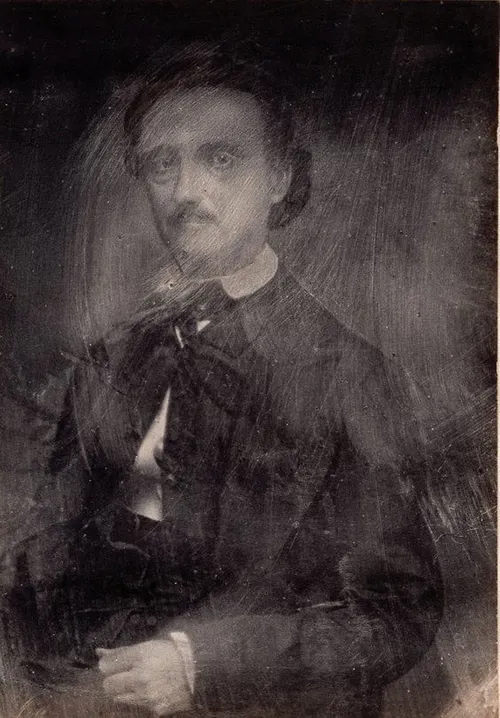
    1. Portrait of Edgar Allan Poe
    • Date: 1849
    • Photographer: William Abbott Pratt
    • Description: A striking daguerreotype of the famous American writer Edgar Allan Poe, taken a few months before his death. This portrait is one of the most iconic images of Poe.
    1. Abraham Lincoln’s Early Portrait
    • Date: 1846-1847
    • Photographer: Nicholas H. Shepherd
    • Description: One of the earliest known photographs of Abraham Lincoln, taken when he was still a lawyer in Springfield, Illinois, long before he became the 16th President of the United States.