How German Expressionism, Soviet Montage, and Italian Neorealism reshaped the language of film
Introduction: When Cinema Became a Mirror
By the 1920s, cinema had evolved far beyond its early days as a fairground curiosity. It was no longer enough to simply capture motion or tell a story—filmmakers began asking deeper questions. What could film say about society? How could the camera reveal psychological truth? Could editing itself become a form of argument?
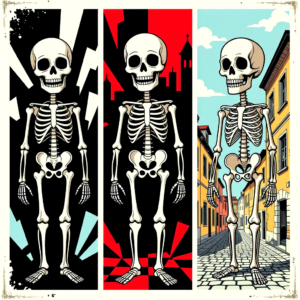
Across Europe, three distinct movements emerged that would fundamentally reshape cinema’s artistic vocabulary: German Expressionism, with its twisted architecture and nightmarish psychology; Soviet Montage, which turned editing into a weapon of intellectual and emotional persuasion; and Italian Neorealism, which dragged the camera out of the studio and into the rubble-strewn streets of postwar life.
These weren’t just aesthetic choices—they were responses to crisis. Each movement reflected the turbulent social, political, and economic conditions of its time and place. And each contributed techniques, philosophies, and visual languages that would echo through cinema for generations, from Hollywood noir to French New Wave, from Hitchcock’s suspense to contemporary art house cinema.
German Expressionism: The Architecture of Anxiety
In the wake of World War I, Germany was a nation in crisis. Defeat, economic collapse, political instability, and social trauma created a landscape of deep unease. German cinema, particularly during the Weimar Republic era (1919–1933), channeled this anxiety into a radical visual style that distorted reality to reveal psychological truth.
German Expressionism rejected naturalism entirely. Instead of filming the world as it appeared, filmmakers constructed fantastical, stylized environments where walls leaned at impossible angles, shadows stretched into claws, and light and dark battled for dominance. These weren’t just artistic flourishes—they were visual metaphors for a society grappling with madness, guilt, and paranoia.
The quintessential example is Robert Wiene’s The Cabinet of Dr. Caligari (1920), a film where painted sets create a twisted, nightmarish world. Every corner is sharp, every alley crooked, every shadow ominous. The film’s revelation—that its narrator is unreliable, possibly insane—makes the distorted visuals retroactively meaningful. We’re not just watching a horror story; we’re seeing the world through a fractured mind.
But Expressionism wasn’t confined to horror. Fritz Lang, one of the movement’s towering figures, brought its visual language to science fiction with Metropolis (1927). A sprawling epic set in a dystopian future city, Metropolis used monumental architecture, stark geometric designs, and sharp contrasts between light and shadow to explore class struggle and dehumanization under industrial capitalism. The film’s underground workers labor in hellish conditions while the elite live in gleaming towers—a visual metaphor made literal through production design.
Lang’s M (1931) brought Expressionism into the sound era, using off-screen sound, haunting whistles, and shadowy cinematography to build unbearable tension around a child murderer stalking the streets of Berlin. The film pioneered techniques still used in thrillers today: the unseen menace, the subjective camera, the use of sound to amplify dread.
German Expressionism influenced film noir, horror cinema, and any genre that uses visual style to externalize inner turmoil. Its legacy is in every shadow that seems too dark, every angle that feels too severe, every set that hints at psychological unease. When the Nazis came to power, many of these filmmakers—including Lang—fled to Hollywood, bringing Expressionist techniques with them and transforming American cinema in the process.
Soviet Montage: Editing as Argument
While German filmmakers were distorting space, Soviet filmmakers were revolutionizing time. In the aftermath of the 1917 Bolshevik Revolution, cinema became a tool of ideological education and propaganda. But rather than simply filming speeches or staging patriotic dramas, Soviet directors discovered that the real power of cinema lay in editing—in the collision of images.
Soviet Montage theory, championed by filmmakers like Sergei Eisenstein and Dziga Vertov, proposed that meaning was created not within individual shots, but in the relationship between them. Two images placed side by side could generate ideas, emotions, and arguments that neither image contained on its own. This was montage as dialectic—thesis, antithesis, synthesis—translated into cinematic form.
Sergei Eisenstein, the movement’s most famous theorist and practitioner, demonstrated this principle brilliantly in Battleship Potemkin (1925). The film dramatizes a 1905 naval mutiny, but its most famous sequence—the Odessa Steps massacre—is a masterclass in rhythmic editing. Shots alternate rapidly between fleeing crowds, advancing soldiers, a baby carriage tumbling down stairs, and faces contorted in terror. The sequence doesn’t just show violence; it builds to an emotional crescendo through the accumulation and collision of images.
Eisenstein called this “montage of attractions”—assembling shots in ways that provoke visceral, emotional responses. He wasn’t interested in seamless continuity; he wanted each cut to jolt the viewer, to make them think and feel simultaneously. His later films, including October (1928) and Alexander Nevsky (1938), continued refining these ideas, using editing to create visual metaphors and political allegories.
Dziga Vertov, meanwhile, pushed montage in a more experimental direction with Man with a Movie Camera (1929), a documentary that celebrates urban modernity through dizzying juxtapositions of machines, workers, and daily life. The film has no narrative, no intertitles, no actors—just pure cinema, assembled from fragments of reality and transformed through editing into a rhythmic symphony of movement.
The Soviets believed editing could educate audiences, training them to make intellectual connections and see the world dialectically. While their work was rooted in propaganda, the techniques they developed—cross-cutting, rhythmic montage, associative editing—became foundational to filmmaking worldwide. Every action sequence, every music video, every montage sequence in modern cinema owes something to these early Soviet experiments.
By the 1930s, Stalin’s crackdown on artistic freedom curtailed the movement’s innovations, but its influence had already spread far beyond Soviet borders, shaping how directors from Hitchcock to Godard thought about the power of the cut.
Italian Neorealism: Cinema in the Rubble
If German Expressionism was about distorting reality and Soviet Montage was about restructuring it, Italian Neorealism was about confronting it head-on—unvarnished, unromanticized, and unavoidable.
In the aftermath of World War II, Italy was devastated. Cities lay in ruins, economies had collapsed, and fascism’s fall left a moral and political vacuum. Studio facilities had been damaged, film stock was scarce, and professional actors were hard to come by. But rather than wait for conditions to improve, a generation of filmmakers took to the streets with whatever resources they had. What emerged was a cinema of immediacy, authenticity, and profound humanism.
Italian Neorealism rejected the glossy artifice of Hollywood and the stylized symbolism of prewar European art cinema. Instead, filmmakers shot on location, often using non-professional actors, natural lighting, and stories drawn from everyday life. The camera didn’t impose itself on reality—it witnessed it.
Roberto Rossellini‘s Rome, Open City (1945) is often cited as the movement’s first masterpiece. Shot during and immediately after the Nazi occupation of Rome, the film tells the story of resistance fighters struggling against fascism. Its rough, documentary-like quality wasn’t just an aesthetic choice—it was a necessity. Resources were scarce, so Rossellini improvised, filming in actual bombed-out buildings with a mix of professional and non-professional actors. The result feels urgent and real in ways that polished studio productions never could.
Vittorio De Sica, another towering figure of the movement, brought Neorealism to its emotional and political peak with Bicycle Thieves (1948). The film follows an unemployed man desperately searching for his stolen bicycle—the only thing that allows him to work. There are no villains, no melodrama, no easy resolutions. Just a man, his son, and the grinding indignity of poverty. De Sica cast non-actors in the lead roles, shot entirely on location in Rome, and crafted a narrative that feels less like fiction and more like observed truth.
The power of Bicycle Thieves lies in its simplicity and restraint. It doesn’t shout about injustice—it simply shows it, allowing audiences to draw their own conclusions. The film’s final shot—a father and son disappearing into a crowd, their dignity bruised but not broken—is one of cinema’s most quietly devastating moments.
Other Neorealist films, like Luchino Visconti’s La Terra Trema (1948) and De Sica’s Umberto D. (1952), continued exploring themes of economic hardship, social inequality, and the resilience of ordinary people. These weren’t escapist fantasies—they were mirrors held up to a society still piecing itself together.
By the mid-1950s, as Italy’s economy recovered, Neorealism began to fade. Studios reopened, audiences craved lighter fare, and filmmakers moved toward more stylized, psychological storytelling. But the movement’s influence was profound. Neorealism’s emphasis on location shooting, naturalistic performance, and social engagement would inspire filmmakers worldwide—from the French New Wave to the cinema of developing nations seeking to tell their own stories outside Hollywood’s shadow.
Cultural Impact and Global Influence
The significance of these three movements extends far beyond their immediate historical contexts. German Expressionism, Soviet Montage, and Italian Neorealism didn’t just produce important films—they expanded cinema’s grammar, proving that film could be as intellectually rigorous, socially engaged, and artistically ambitious as literature, theater, or painting.
German Expressionism laid the groundwork for psychological cinema. Its visual distortions, atmospheric lighting, and subjective camera work became staples of film noir, horror, and suspense. When Alfred Hitchcock crafted the nightmarish set pieces of Vertigo (1958) or the shadowy paranoia of The Third Man (1949), they were drawing directly from Expressionist traditions. Even contemporary filmmakers like Tim Burton, Guillermo del Toro, and Robert Eggers owe debts to those early German masters who understood that reality could be bent to reveal deeper truths.
Soviet Montage revolutionized how we understand editing. Before Eisenstein and Vertov, cutting was largely functional—a way to change scenes or compress time. They proved that editing could be expressive, intellectual, and emotional. This insight influenced not just narrative cinema but also experimental film, music videos, and even digital media. Every rapid-fire action sequence, every music-driven montage, every moment when meaning emerges from the clash of images—those are echoes of Soviet innovation.
Italian Neorealism changed what stories cinema could tell and how it could tell them. By stripping away studio artifice and focusing on ordinary lives, Neorealist filmmakers demonstrated that authenticity and emotional truth didn’t require stars, sets, or big budgets. This philosophy inspired the French New Wave, British Kitchen Sink realism, and socially conscious cinema across Latin America, Africa, and Asia. Directors like Satyajit Ray in India, Ousmane Sembène in Senegal, and the Dardenne Brothers in Belgium all drew from Neorealism’s well of humanistic, location-based storytelling.
These movements also reflected the political and social upheavals of their times. German Expressionism emerged from the trauma and instability of Weimar Germany, visualizing a society on the edge of collapse. Soviet Montage was born from revolutionary fervor, turning cinema into a tool for ideological education and mass mobilization. Italian Neorealism rose from the ashes of war, bearing witness to suffering while affirming human dignity in the face of hardship.
In each case, cinema became more than entertainment—it became a form of cultural testimony, a way of processing collective trauma, and a means of imagining different futures. These filmmakers didn’t just document history; they interpreted it, transforming raw experience into lasting art.
Movements That Moved the World
German Expressionism, Soviet Montage, and Italian Neorealism weren’t just phases in film history—they were revolutions. Each emerged from specific cultural and political conditions, yet each transcended those origins to reshape how the entire world makes and watches movies.
They taught us that shadows could speak, that cuts could argue, and that truth could be found in the streets as much as in studios. They proved cinema wasn’t limited to escapism or spectacle—it could grapple with psychology, politics, and social reality with as much depth and nuance as any other art form.
Today, their influence is everywhere. When a horror film plunges us into subjective dread, that’s Expressionism. When an action sequence builds intensity through rhythmic editing, that’s Montage. When a film shoots on location with non-actors to capture lived experience, that’s Neorealism.
These movements remind us that cinema, at its best, is both a reflection of its moment and a conversation across time. The questions they asked—How can film reveal inner life? How can editing shape thought? How can cinema bear witness to reality?—are questions filmmakers are still answering, frame by frame, cut by cut, story by story.
The legacy of these pioneers lives on every time a filmmaker picks up a camera not just to entertain, but to see—and to help us see more clearly as well.